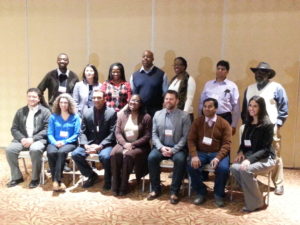

Note. The subject matter of this blog post is not new. It has been known for years by those who learned about it in their families, or who have discovered it on their own. It’s simply a discussion from my personal perspective which I think is worth visiting. The pictures displayed throughout this post are from the eastside of my hometown of Buffalo, NY. My first money lessons started there – a lot of what not to do, and they capture the essence of some of the money challenges facing my brothers and sisters in my hometown and across the country.
Money Lessons From Your Family
Life is literally a lottery and regardless of your color or nationality, one of its immutable truths is that you can’t control the family you were born into. You can’t control the parents you are born to, which likewise dictate the privileges and advantages you have access to. We often think of privilege in terms of black and white (White Privilege), but there are also black families that have privileges over other black families. The family you are born into in large part guides your start in life, the information, and the values that will dictate your early life choices – good or bad, though they don’t necessarily shape all that comes afterwards – a good thing for some.
Neither of my parents talked about what a Net Worth was when I was growing up. As described in the Big Words Blog Site Story, my mother and her siblings were first generation college students – descendants of parents who were a part of the Great Migration. My father’s situation was similar. They were children of the Civil Rights Era, and thus the big goal for them was earning college degrees and then securing stable jobs on equal footing with their white peers. That for them was winning and it was also a surpassing of their elders. For those of us born from their generation (Generation X), going to college was also expected, but what would be the next level for us? What was winning for our generation?
One’s Gross Income Vs. Their Net Worth

These days I have a lot of discussions with via text messaging with my brother Amahl, and three close friends from Hutch-Tech High School in Buffalo, NY: the twins Alim and Raheem Gaines and our other buddy, Hestin Brown. All week long we discuss topics including sports, politics, and some of the silly stuff we see in the media, on Black Twitter and on Facebook. We discuss social issues as well, particularly as they relate to the black community. We’re a “Black Male’s Support Group”, or even our own little “Think Tank”. Recently in a group dialogue that started out with a controversy regarding Tyrese Gibson’s spouse and whether she was actually black, something else much more important came up, the concept of one’s net worth.
Alim cited something he heard about listing what black men in the United States earn in terms of average gross income. I responded wondering what the breakdown was for black women and Alim on cue cited the 2010 study by Mariko Chang describing Black and Hispanic women having average net worths of only $100 and $120. I quickly pointed out that there was a difference between one’s gross income and their net worth. My brother, the eldest in our group, asked what a net worth was. For perspective, we’re all just above the age of 40. Alim and I both knew the answer and gave it. I shared that I was first introduced to the term in my late 20s, but didn’t completely grasp it until my mid-30s – very, very late in the game. I pondered the fact that my brother still hadn’t grasped it yet – not a knock on him by any means, just our life’s circumstance. I then wondered how our own life decisions would have been different had we known this important concept in our teens.
What Is Your Net Worth?

Just briefly, your net worth is the numerical difference between what you own and what you owe – your savings and your assets minus your debts and obligations (liabilities). Your savings are self-explanatory – the amount of liquid cash you have available and can access quickly. Assets can be anything from securities such as stocks, gold or silver, real estate investments, equity in your home, or profitable businesses. If you’re an employee, a major contributor to your net worth is your retirement savings – that’s if you’ve been disciplined enough (and able) to steadily set money aside, which is something that the experts at Horan Wealth Estate Planning can help you with. Debts/liabilities are self-explanatory as well. Common forms of debt are: credit cards, car notes, mortgages, home equity lines of credit, loans against your retirement savings, etc.
I only started learning about what a net worth was in my late 20s, out of curiosity and chance. Books like the Rich Dad Poor Dad talked about it, in addition to the Millionaire Next Door. In Dave Ramsey’s Financial Peace University (FPU), the term is not explicitly addressed, but FPU’s ‘Baby Steps’ ultimately lead to a steadily increasing net worth.
A Metric Of Your Wealth
Okay, so what’s the big deal about this somewhat abstract and nebulous term that only few understand? The answer is that your net worth is a metric of your wealth which is very, very different than your gross salary. This is a critical distinction because a high gross salary doesn’t necessarily translate into a high net worth. A person or a couple can have high gross salaries and still have a negative net worth(s).
In Black America we’re often enamored and impressed with individuals who make six figures. Similar to one’s occupation, making six figures by itself can be deceptive. You would assume that a medical doctor, a lawyer, or a news anchor would be very comfortable, but not necessarily – the same is true for someone who makes six figures. Imagine if a person has a gross salary of $100,000 and their expenses are $95,000. They’re still essentially broke right? Beyond a certain point, your gross income is what Malcolm Gladwell in his book, Outliers, calls an ‘Entrance Criteria’ – an attribute that allows you entry into a club, though it isn’t a predictor of greatness. ‘Excellence Criteria’ is what separates the great from the average and the underachievers. These are the things that allow one to become wealthy in this case.
Contrary to the images we’re bombarded with in the media, the excellence criteria for building your net worth don’t necessarily involve a lavish and high consumption lifestyle, but instead being frugal and careful with one’s money. Dr. Thomas Stanley wrote extensively about this in his Millionaire Next Door series. This means that many people are chasing after the wrong things in life and not knowing it until it’s too late.
Increasing Or Decreasing Your Net Worth
What are some keys to growing your Net Worth? Some of them include:
- Budgeting one’s money and controlling costs – learning to run a surplus vs. a deficit;
- Saving money gradually in an emergency fund, retirement and then potentially for investments and;
- Carrying the least amount of debt possible.
What are some keys to keeping and maintaining a low/negative net worth? Some of them include:
- Spending more than you earn – spending everything you earn;
- Not saving anything and;
- Carrying large amounts of debt – particularly on the things that lose value or don’t justify borrowing the money – cars, sneakers, and degrees which don’t lead to well-paying jobs.
In his Rich Dad Poor Dad series, Robert Kiyosaki actually defines wealth as the amount of time one can go without working while still being able to cover expenses.

But what are the greater implications of growing your net worth and wealth? They can position you to do things like build businesses. They can be used to donate to charities, and to give other students, for example, the chance to go to school to better themselves – something sorely needed in Black America. This is the importance of organizations like the United Negro College Fund for example. They can be used to fund political candidates and campaigns, and have a true seat at the table when national and local policy decisions are made. At the end of the day, politics is all about money right?
In Black America right now discussions, like the ones my buddies and I have, are actually taking place about the differences between having a high net worth and having a high salary – again two things which don’t necessarily correlate. One gentleman on Twitter, a Nigerian I think, who regularly beats the net worth drum often rebutting people who think they’ve made it because they’ve attained a high gross salary and have luxury items like Mercedes Benzes and BMWs. While these are prestigious toys, they gradually lose value and deceptively don’t translate into wealth.
Can You Negotiate Your Net Worth With Your Employer?

The interesting thing about one’s net worth is that it can’t be negotiated with one’s employer – it’s something that must be decided and acted upon by the individual once they understand it – like choosing to eat healthy or choosing to continue to eat an unhealthy diet. It can’t be legislated or forced upon groups of people, nor should it be. It’s a personal choice just like practicing a religion or choosing a spouse. Speaking of which, I’ve read that judges actually consider a couple’s net worth during divorces and usually just split everything down the middle – a source of tension particularly when one of the spouses hasn’t earned the assets being split.
“Tasha and Ron are living large. She’s a School Administrator and he’s a Fireman,” my mother said about couple in their 40s who are friends of the family. She was looking at their professions and what she thought their salaries were and concluded that they were winning financially.
“Actually you don’t know that, Mom,” I said in reply. “People can look like they’re making it on the outside, but without knowing their savings, their bills and their debts are, you don’t really know how they’re doing.” My response echoed Robert Kiyosaki’s books where he stated that an individual’s financial success is actually dictated by their income statement and balance sheet – two things you can’t see by looking at someone – but things banks weight highly when qualifying individuals for mortgages or business loans.

What prevents individuals from growing their net worths? Several things actually. One is ignorance. If no one ever tells you about it and you don’t stumble upon the information, you’ll never know. Secondly, personal choices prevent one from doing it. It takes discipline and drive, and many individuals lack those. As a man, if you’ve recklessly had a bunch of kids and are bogged down with child support payments, you’ll probably never get there.
If you’re a single mother also with many kids, you’ll also have a hard time getting there as well. It’s not impossible, just exponentially more difficult. In one of his videos, Dr. Boyce Watkins stated that the average cost of a child is $250,000 up until it turns 18 years of age. The other piece is that in some instances, particularly in Black America, only a handful of people in a given family get educated and earn a decent salary. Those individuals are often looked upon to take care of everyone else – a potential, “Siphoning off of the wealth,” as Dr. Michael Eric Dyson said, partially joking, at the 2015 Congressional Black Caucus Annual Legislative Conference. That day he was leading a Wealth-Building panel.
Who Can Become A High Net Worth Individual?
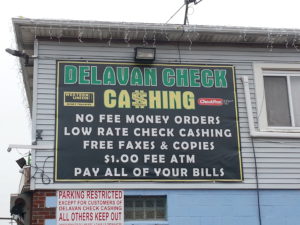
Growing a high net worth doesn’t necessarily involve going to get a Ph.D., an M.D., a Pharm D., or a J.D. You actually don’t necessarily need a college degree to do it. It simply requires a steady stream of income, understanding debt, and priorities. This is what Dave Ramsey meant when he said, “Money is 20% knowledge and 80% behavior.”
This is also one of the key principles in Robert Kiyosaki’s Cashflow game where players must choose their profession before playing. One would think in the game that it would be easier to get out of the “Rat Race” by being one of the higher income professionals like the doctor, lawyer, or the airline pilot, but it’s actually easier as the web designer or the janitor. While they generate less gross income, they also carry less debt and have fewer bills. Their cost per child is also less than the higher income professionals.
Understanding what a net worth is and then making the decisions to grow it is a paradigm shift and a powerful one. As with most things, we all have lives and everyone’s situations are unique. We all have relatives and friends who may not necessarily understand the decisions and temporary sacrifices being made, and thus it’s important to know your own motivations – you have to know your ‘why’.
Concluding Thoughts
Again, a net worth is not a salary that you make every year. It’s a result of spending habits and specific money choices. How often should it be calculated? One of my mentors told me that it should be calculated quarterly. If you haven’t been paying attention to it, your initial assessment may not look pretty, but it gives you a place to start from – kind of like a doctor’s checkup.

So what’s your net worth? Don’t answer that. From experience, just like your gross income, it’s best if you keep it to yourself and only share it with a trusted few if anyone at all. Money does different things to different people, and when people think you have it, it can do strange things to your relationships – your relatives and friends.
Thank you for taking the time to read this post. If you enjoyed this post, you might also enjoy:
• The difference between being cheap and frugal
• We should’ve bought Facebook and Bitcoin stock: An investing story
• Challenging misconceptions and stereotypes in class, household income, wealth and privilege
• What are your plans for your tax cut? Thoughts on what can be done with heavier paychecks and paying less tax
• Who will have the skills to benefit from Apple’s $350 billion investment?
• Mother’s Day 2017: One of my mother’s greatest gifts, getting engaged, and avoiding my own personal fiscal cliff
If you’ve found value here and think it would benefit others, please share it and or leave comments. To receive all of the most up to date content from the Big Words Blog Site, subscribe using the box in the right-hand column in this post and throughout the site, or add the link to my RSS feed to your feedreader. Please visit my YouTube channel entitled, Big Discussions76. Lastly follow me on Twitter at @BWArePowerful, on the Big Words Blog Site Facebook page, and on Instagram at @anwaryusef76. While my main areas of focus are Education, STEM, and Financial Literacy, there other blogs/sites I endorse which found on that particular page of my site.
 One of the goals of the Big Words Blog Site is to discuss Financial Literacy-related topics, particularly as they relate to the African American community. A key aspect of wealth building is homeownership. Coincidentally, for my very first interview for the site, I had the privilege of interviewing the very knowledgeable Simone Griffin of
  One of the focuses of the Big Words Blog Site is Education – all aspects. Higher education is not just a means to a career and upward mobility, but it’s also a business with both benefits and costs to the student, parents, the institution, and society. Likewise, one of the major concerns of parents and students, in addition to getting into a school, is actually financing the college tuition, room and board. The amount of money awarded students was, in fact, one of the major discussion points recently at the
  This is the continuation of my Black History Month interview with Dr. Vernon Morris of Howard University’s Department of Chemistry and
  Vernon Morris: We started in 2009 and part of our motivation is that we were seeing fewer and fewer students from Washington, DC who were coming to chemistry, or even coming to
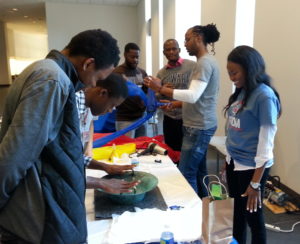
  VM: Yes, the kids really enjoy it in addition to the
  VM: I don’t think it’s cultural. I think it’s socioeconomic. I think you’d find a similar thing across all cultures if the economic stresses are great enough. If the economic stresses are lower, parents have more time to go to the family science fairs or
  There is a separate body that governs what goes into the schools. The politics of the DC schools,
  VM: I would say this about a science career in general, it’s a very rewarding career. I really enjoy what I do and I love coming to work every day. It’s part exploration, mentoring and teaching, and writing and being creative. It’s being quantitative and using both sides of your brain. And you can give back to the community and the nation in a very unique way. And I think there are so many opportunities in science. People think, “I don’t want to do chemistry and I don’t want to sit in a lab and mix chemicals”, but there’s a whole world of stuff outside of the lab that you can do. It’s the same thing for physics or mathematics, or biology. It’s an area that if you study it, the world is open to you.
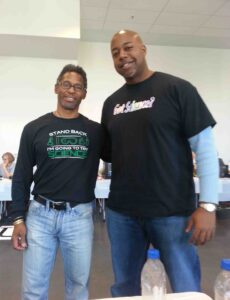 VM: Okay, that would great. We’d love to have you come out and help out Anwar.
 VM: No, I actually was not exposed at all. I never had the chance to do science fairs or any of that stuff. I think my first exposure to anyone who was in science was actually one of my mother’s friends, Carolyn Clay, who was an engineer from
 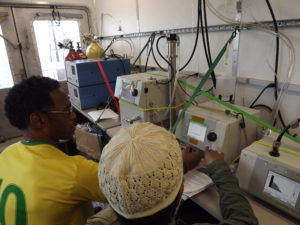 VM: From
  VM: We’re working on a lot of stuff, but the work revolves around trying to get a better quantitative understanding of how atmospheric particulates influence the chemistry of the atmosphere and climate across multiple scales. These are multiple spatio-temporal scales. There are time scales because the lifetime of aerosols tends to be days to months, but their influence in the atmosphere tends to range from that time scale to much longer time scales as clouds change their optical properties; that influences radiative balance and seasonal fluctuations. If you look at particle evolution, once an aerosol is formed and injected into the atmosphere from the ground layer, how does it influence and have these multiplying effects across larger spatial fields as it moves around the atmosphere, and through larger temporal scales as it effects something that has a multiple “follow on” effect?
 The ship experimental cruises allow us to look at the transport of aerosols that are transmitted from Africa either from the Sahara Desert or as a result of burning biomass from “Slash and Burn” agriculture. Particles get into the atmosphere and influence tropical cyclone development, and they influence acidification of the upper ocean. They also influence microbiological transfer, the transfer of microbes across hemispheres. They influence cloud properties and precipitation properties downstream and food security. So they have all of these implications that are much longer and much larger than a particular fire, or a particular dust storm. You have to connect that with field observations, laboratory studies and with space-based observations as well.
 AD: You know, Vernon, as you were talking just now, I was just reflecting on how important it is to know these things. A couple of years ago a mentor who himself isn’t a scientist, but who saw that I was trying to develop my own writing and mentoring voice, gave me a copy of “
 From Feb. 10-12, the

 One of the goals of the Big Words Blog Site is advocacy of
  TS: Even though I grew up in a college educated family and most of the adults in the village that raised me were college educated, there were no STEM professionals in my network, other than my aunt who was a Microbiologist for the
  TS: Science, Engineering and Mathematics Link, Inc. (SEM Link) is a tax-exempt national nonprofit organization, which I founded in 2005 in Atlanta, GA, on the premise that exposure to members of the
  In 2005, I decided to create a nonprofit organization to expose more youth to
  TS: Minorities, especially African Americans, come from cultures that have had scientists, engineers, mathematicians and inventors dating back to Ancient African civilizations. African Americans have continued throughout history and today to make an impact in the
  TS: I think the reason that kids are flocking towards techie stuff is because of the current trend to push teaching all kids to code. The reality is not all kids have the ability or are interested in coding and tech. However, coding and tech are easy to push because it is something that the general public can understand because, unlike other
  TS: My parting comment is the keys to getting kids interested in pursuing
  From the Jan. 27-29, the
 “Going forward, by 2050 we’re going to have to double food production to feed the population – a tremendous responsibility. The biggest threat in my mind to that grand challenge is contamination to our water and our soil from various chemicals and toxins,” said Dr. Patrick Halbur. “We need people focused on that area to prevent and solve that problem, and so there are tremendous opportunities in
 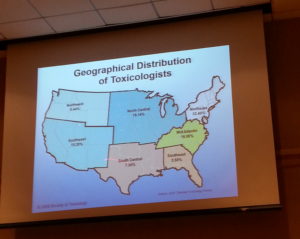 Just briefly, Toxicology is the science of characterizing the effects of poisons (toxicants) on living organisms. The
  “
“