A Look at STEM: What is Inhalation Toxicology?

“While other bodily tissues can tolerate varying degrees of O2 deprivation, it is well understood that even short periods of deprivation of the brain can cause irreversible damage, unlike with long periods of food and water deprivation.”

Inhalation Toxicology

With the exception of my Blockchain Technology post, my previous Science, Technology, Engineering and Mathematics (STEM) posts have covered the fields of: Pharmacology, Toxicology, and ADME/Drug Metabolism – all of which are considered ‘Biomedical’ sciences. Similar to those fields, Inhalation Toxicology as a discipline dates back to over a century ago, and is very complex regarding the wealth and depth of information available. It’s also still evolving today.

The goal of this post is not to address every detail and nuance of the field, but instead to give readers unfamiliar with it a basic introductory understanding of the discipline. This post was prepared for a general audience and thus any fellow Inhalation Toxicologists who may read this, may find it a little too simplistic. That’s okay though, as the goal is to educate others on our field and what we do. Further details about the many aspects of Inhalation Toxicology can be accessed online, or in scientific journals.

This overview of Inhalation Toxicology definitely falls under my principle of ‘Creating Ecosystems of Success’ as it is a very unique knowledge and skill set possessed by only a select few – one of which I acquired accidentally when seeking training in ADME/Drug Metabolism as a ‘Postdoctoral’ scientist. Why is Inhalation Toxicology a unique skill set? I’ll start with a holistic discussion about the three routes of human exposure which will take us briefly into another biomedical discipline; ‘Anatomy and Physiology’, which deals exclusively with the organ systems within the human body, and how they collectively work together at the tissue and cellular levels.

Routes of Exposure

My posts regarding Pharmacology, Toxicology, and ADME/Drug Metabolism focused on exposure to chemicals primarily through the oral route – ingestion through the mouth and then absorption into the ‘Gastrointestinal Tract’ (GI-Tract). While we typically think about the ingestion of chemicals through the oral route, the reality is that humans can be exposed to drugs and toxicants through two other routes; the dermal route by way of our skin, and the inhalation route by way of our ‘Respiratory Tracts’ – the region spanning from our nasal passage down into our lungs where gas exchange with the atmosphere occurs. Each route has its own unique properties anatomically which impact the potential absorption of chemicals into the body where they can exert their therapeutic or toxic effects at specific tissues.

Each route receives differing amounts of what’s called the ‘Cardiac Output’ or the blood delivered from the heart. On average, the GI-Tract receives 21%, the skin receives 9%, and the lungs receive 100% of the heart’s Cardiac Output. This makes sense as the function of the lungs is to facilitate gas exchange between our bodies and the Earth’s atmosphere.

The Alveoli and Gas Exchange

The lung’s ‘Alveoli’ are critical for the body’s absorption of ‘Molecular Oxygen’ (O2) into the bloodstream. Once inhaled, the O2 in the air is very rapidly absorbed into the pulmonary capillaries from the alveolar spaces where it binds to the ‘Hemoglobin’ in our blood while the ‘Carbon Dioxide’ (CO2) releases into the alveolar spaces to be exhaled. This exchange of O2 and CO2 are both very rapid and efficient in healthy lungs – something our bodies do without us even thinking about it. What allows for this very efficient exchange of gases with the environment is a very, very thin 0.5 micron three-cell layer separating the alveolar spaces from our pulmonary capillaries.  These capillaries immediately receive and return blood to the heart for distribution to the body.

Without the continuous exchange of O2 and CO2 through our lung’s alveoli, our bodies could not function as O2 is a necessary substrate for our body’s many tissues at the cellular and molecular levels. This is important because while other bodily tissues can tolerate varying degrees of O2 deprivation, it is well understood that even short periods of deprivation of the brain can cause irreversible damage, unlike with long periods of food and water deprivation. For this reason alone, maintenance of proper respiratory function is critical. With that, I’ll transition into what Inhalation Toxicology is and why it’s important.

Hazard Through Inhalation

Inhalation Toxicology is the study of the harmful effects of chemicals on living systems through the inhalation route of exposure via breathing – typically as it applies to mammalian species. It’s a very important field as respiration is a critical biological process for mammals as described above, and thus any toxicant that compromises the body’s capacity to exchange O2 and CO2 with the environment is very dangerous.

Before I discuss the types of chemical agents that can cause injury through inhalation exposure, I’ll first describe the two types of effects that can result from exposure to inhalation toxicants; ‘Portal of Entry’ effects and ‘Systemic’ effects. A Portal of Entry (POE) effect is an effect produced in the tissue or organ of first contact with a chemical or toxicant. In this case it’s an effect where a toxicant causes damage starting from the nasal passage down into the multiple regions of the lung. There are multiple regions and cell-types along the respiratory tract – each with specific functions – all of which can be uniquely injured.

In laboratory settings described later, some POEs are instant when observing lab animals and manifest as ‘clinical signs’ which are visible. Irritation in the respiratory tract can trigger the ‘Paintal’ reflexes and ‘Bradypnea’ in rodents which are immediate changes in the breathing patterns of the animals through very sensitive nerve processes and receptors in respiratory tissues. Anyone who has worked in a research lab and has opened a bottle of concentrated Hydrochloric Acid outside of a fume hood appreciates how quickly irritation can occur, as it only takes seconds to feel the burning sensation in the nose followed by: coughing, watering eyes, shortness of breath, etc.

Long-Term Effects

Other POE Effects are more time dependent and can take hours, days, or weeks to fully set in. Some are some are reversible, while others are irreversible. Prolonged exposure to some toxicants can cause ‘Inflammation’ in the lungs leading to ‘Pulmonary Fibrosis’ (formation of scar tissue) or the formation of ‘Pulmonary Edema’ – both of which compromise lung function and can eventually be fatal. ‘Asbestos’ poisoning causes injury through prolonged activation of the ‘Immune’ system in the lungs, damaging them over time as the Asbestos particles cannot be removed once inhaled.

Smoking cigarettes is a good example of people willingly injuring their lungs. The paper used to roll cigarettes and the ‘Tobacco’ inside them contain thousands upon thousands of compounds before the cigarette is even ignited. Once lit and those chemicals are ‘combusted’, they transform into numerous other chemicals – some of which are referred to as ‘Reactive Intermediates’ which themselves come into contact with the cells of the Respiratory Tract. Years and years of direct cigarette smoke inhalation can cause irreversible damage leading to diseases like Lung Cancer. There is also risk of lung injury from living in industrial areas where there is the potential to inhale combusted compounds and particulates from factory emissions.

Before moving on, I’ll add here that while many inhalation toxicologists consider the lung itself to be the most important part of the Respiratory Tract, recent science has shown that the Nasal Passage is also a toxicologically revelation tissue as it relates to inhalation exposure. It contains drug metabolizing enzymes similar to those described in my ADME/Drug Metabolism post.  The lungs do as well.  Some chemicals can thus damage these regions if inhaled for prolonged periods of time.

Systemic Effects

Systemic effects refer to injury/toxicity in other parts of the body beyond the Respiratory Tract. If a chemical/toxicant can efficiently pass through the lung’s alveoli as described earlier, it can enter the blood stream and into the body’s general circulation.  From there it can damage other organs as discussed in my Toxicology post. Medicinally, some therapeutics such as anesthetics for surgeries are actually administered this way – Halothane is an example.

Two classic systemic inhalation toxicants are Carbon Monoxide (CO) and Hydrogen Cyanide (HCN) which I’ve hyperlinked in case you’re curious to learn more about how they work.  While CO poisoning has been associated with accidental deaths from tailpipe emissions in garages, HCN is a known potential chemical weapon which is particularly dangerous in enclosed spaces such as subway stations – something our intelligence agencies are very aware of.

These are just a few examples of toxicity through the inhalation route of exposure. There are many other chemicals and substances that can cause injury and in some cases therapeutic benefit through the inhalation route of exposure. Many industries and groups highly consider Inhalation Toxicology. They include:

The Chemical Industry: Pretty much any industrial chemical that’s generated has the potential for inhalation exposure depending on its ‘Physical-Chemical’ properties, and how it’s used. These include paints, pesticides, and disinfectants – any product that companies are looking to sell to the general public.
The Tobacco Industry: The Tobacco Industry has to have a firm understanding of what cigarette smoke does to its customers and bystanders inhaling ‘second hand’ smoke. They are thus very interested in the long-term effects of cigarette smoke inhalation.
Nanoparticles and Nanomaterials: We’re very early in the use of ‘Nanomaterials’, and there is a lot that is unknown regarding the toxicity of these particles – in this instance, when they’re inhaled.
National Defense: Our military and the ‘Defense’ sector very much care about Inhalation Toxicology as soldiers are sometimes sent into theaters of war where enemies use biological and/or chemical weapons. There are also unfortunate incidences where chemical weapons are unleashed on civilians such as the recent chemical attack in Syria where rescue officials believe the agent used was Chlorine gas.
The Pharmaceutical Industry and Medical Devices: Some medicines can and must be delivered through the inhalation route. A classic example is the use of ‘Albuterol’ for patients with Asthma, but there are numerous other examples such as when anesthetics and other treatments are given through inhalation exposure.
Public Health: Federal and State governments, academic researchers and private sector companies are always cognizant of how the general public is exposed and affected by any of the chemicals described above which invariably end up in the air, and can cause any number of disease states including Asthma, and in some cases Lung Cancer.

Inhalation Toxicology Research

Having introduced the field in terms of background and context, I’ll now discuss some of its experimental and technical aspects using visuals provided by CH Technologies – a leading company in the manufacture of Inhalation Toxicology exposure systems. Inhalation Toxicologists and Scientists not only need an understanding of the biology of injury to the Respiratory Tract via inhalation exposure (examples described above), but they also need an understanding of how to properly create the experimental conditions to test for inhalation toxicity. It’s relatively straight forward to feed a test specimen the chemical of interest in food or water, or to apply it via the skin, but how do you administer it for inhalation exposure?
The answer is that the chemical must be administered as a ‘gas’, an aerosol’, a ‘dust’, or even a ‘cigarette  smoke‘ suspension in some instances. This involves some knowledge of Chemistry and Physics, as well as Mathematics and Statistics. A key aspect of any toxicological field is proving the concentration/dose tested and properly correlating it with the effects observed. Scientists must thus be able to verify their test atmospheres, and there are numerous ‘analytical’ chemical methods for doing so.

Gases, Aerosols, Dusts and Vapors

Some chemicals readily exist in the ‘Gas Phase’ – that is they have what is referred to as a high ‘Vapor Pressure’ and are very ‘Volatile’. Some are liquids while others are solids. Mothballs are an example of a volatile substance – a solid which ‘sublimes’ and converts directly into a vapor. They give off the unique odor most of us know from our grandparents’ closets, and are comprised of the chemical ‘Naphthalene’ which itself has a high vapor pressure. Other chemicals have low vapor pressures and are considered ‘Non-Volatile’ and must form aerosols to be inhaled – think of a mist from a spray bottle. ‘Dust’ suspensions can be generated as well for experiments. In some instances, generating inhalable suspensions are not feasible depending on the properties of the test material of interest.

Test Models and Species

While the test species for Inhalation Toxicology studies vary, the species of choice is typically rodents – rats and mice. In some instances guinea pigs and primates are used. Each of these species possess the same organs that humans possess for the most part, and are thus useful models for human exposure.  Scientists must be well trained in both caring for the test animals and also operating the highly specialized equipment used in these studies which I’ll cover next.

Test Systems
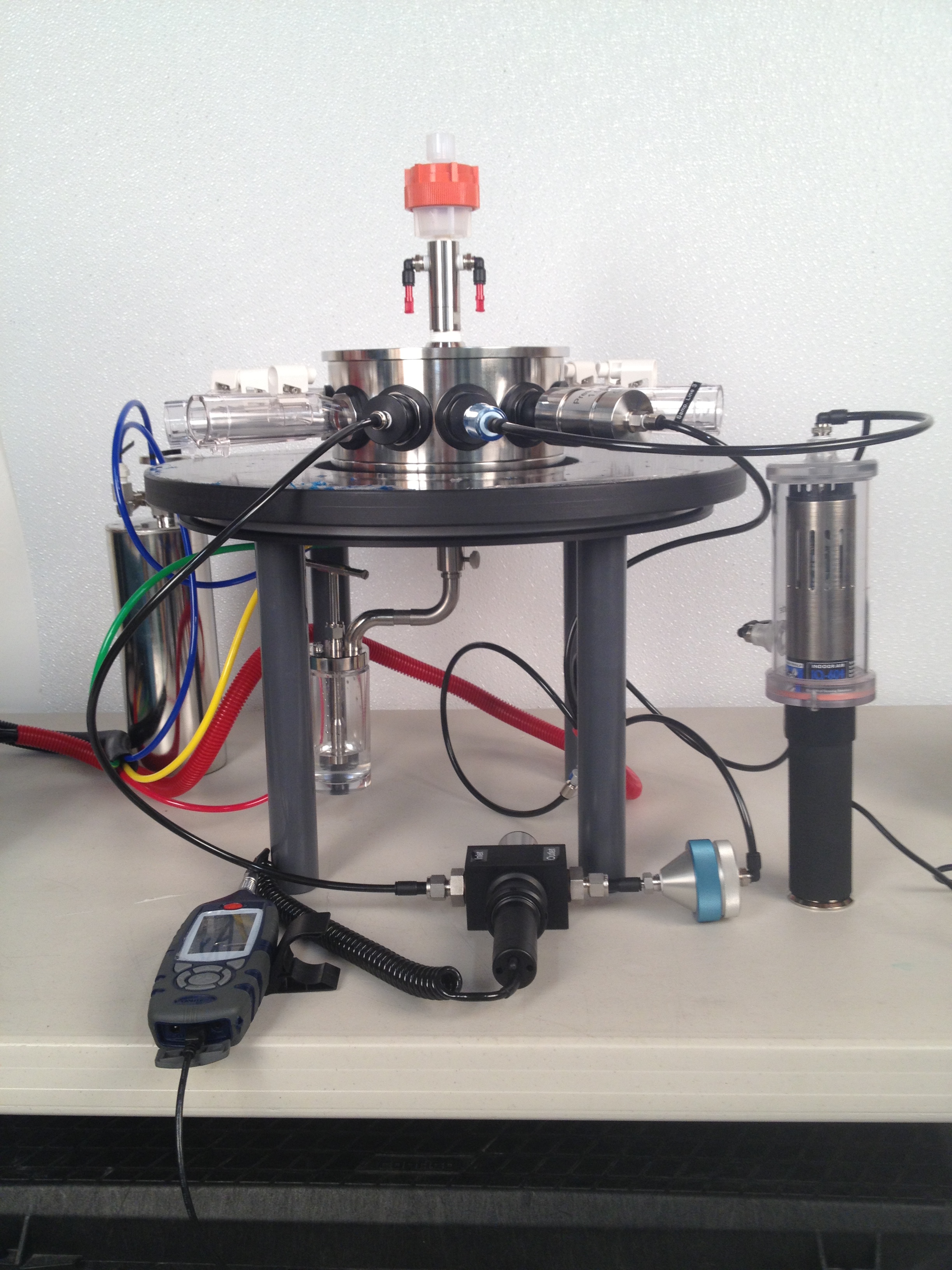
Testing a drug’s/chemical’s efficacy/toxicity through inhalation exposure requires the use of an ‘exposure chamber’ where an inhalable atmosphere of the test article is generated for inhalation exposure by the test subjects.  The accompanying picture shows a single level chamber with the accessory equipment used for measuring the chamber’s inner atmosphere using some of its ‘exposure ports’. Click on the image to enlarge it. Using the accessory equipment, the concentration of the test material in the chamber can be monitored by the scientists running the experiment, in addition to other important measurements including: O2, CO2, temperature and humidity to name a few.

To generate the chamber’s test atmosphere, most modern systems utilize an air-pressure pump to create an in “inflow” into the exposure chamber, and a vacuum pump to create an “outflow” from the chamber – together creating a consistent supply of O2, and removal of CO2 for the test subjects. The accompanying diagram shows a complete inhalation exposure system designed to expose the test subjects to aerosols. Click the image to enlarge it. Whether gases, aerosols or dusts are generated, a supply-line for the test article is ligated into the air supply line feeding the exposure chamber, allowing for the control of the concentration within the chamber by the scientist – something that must be actively monitored throughout experiments.

Whole-Body and Nose Only Exposures

Inhalation studies can use ‘whole-body’ chambers where the animal’s whole body is exposed, or ‘nose- or head-only’ chambers which in some instances have become the preferred method due to their increased specificity to the respiratory tract. A potential drawback of using Whole-Body chambers is that test subjects – usually rodents in the process of grooming themselves can orally ingest the test material by licking their fur coats.  ‘Dead space’ within whole body chambers is also a drawback.  The accompanying picture shows how a rodent sits in a ‘restraint‘ tube during exposure.  An important key to properly running inhalation exposure experiments, is making sure that animals are adequately acclimated to the tubes and are comfortable in them for extended periods of time.

The accompanying photograph shows a Nose-Only inhalation exposure chamber with all of its exposure ports occupied by the restraint tubes for rodent species. Click on the image to enlarge it.  The picture further shows how the number of animals exposed can be increased by stacking multiple chamber levels and increasing the total number of exposure ports.

Depending on the questions being asked in that particular experiment, exposures can range from: hours, to days, to weeks, to months and years. During and afterwards, any number of toxic or therapeutic biological responses can be measured including changes in: clinical signs, body weights, blood chemistry, clinical chemical parameters, and changes in organ weights and tissue microstructure (histopathology). Again, collectively these are a very technical set of experiments to run, and which require a very specific and unique skill set.

Inhalation Toxicology Training

How can students get trained in Inhalation Toxicology? Beyond high school, students can major in Biology, Chemistry, or any of the Biomedical sciences as undergraduates where they can start receiving lab training if there are researchers at that particular university, or one close by. Further training can be obtained at the Masters or Ph.D. levels. Similar to Pharmacologists, Toxicologists and Drug Metabolism Scientists, Inhalation Toxicologists generally receive their training at major research universities.

As a sub-discipline of Toxicology, scientists looking to receive training in Inhalation Toxicology can have varying backgrounds in terms of degrees conferred. If an individual doesn’t initially train in an Inhalation Toxicology lab, they can work in these labs as Postdoctoral scientists or ‘Fellows’ with any of the Biomedical degrees, and even with ‘Medical’ and ‘Veterinary’ degrees. When I gained my training in Inhalation Toxicology, my Ph.D. was actually in Pharmacology.

Depending on the degree level earned and where the scientist is employed, Inhalation Toxicologists can earn starting salaries of $60,000-$70,000 and above. One of the themes of my posts in this series is there is a tremendous amount of flexibility and overlap in the Biomedical sciences. Upon receiving training in Inhalation Toxicology, scientists must then determine which sector they want to pursue – academia, the private or public sectors, or nontraditional careers. Scientists with this background also have the flexibility to combine their knowledge sets with other disciplines to go into a wide variety of areas in: pharmaceutical companies and biotechs, chemical companies, consulting, patent law and even starting their own companies and ‘Contract’ labs.

Toxicology For the 21st Century

It’s worth reiterating something from my Toxicology blog post and that is there’s an effort currently underway called ‘Tox-21’ or ‘Toxicology For the 21st Century’. One of the goals for Tox-21 is to minimize animal usage. Currently, there are efforts to develop methods to test for inhalation toxicity using in vitro models and cell culture preparations simulating animal tissues. Students interested in this field will position themselves well by learning about some of these advances that are on the horizon.

Thank you for taking the time to read this post, and I hope I was able to shed some light onto what Inhalation Toxicology is as a field. Similar to the other disciplines I’ve discussed, Inhalation Toxicologists have their own professional societies and meetings. While the Society of Toxicology has subsections on Inhalation Toxicology, the field has two of its own professional societies and meetings; the American Thoracic Society, and the American Heart Association as the Heart is a major organ affected by the inhalation of toxins.

The next posts in this series will talk about what Regulatory Science is, and then my personal journey towards becoming a Scientist. If you enjoyed this post you may also enjoy:

A look at STEM: What is Pharmacology?
A look at STEM: What is Toxicology?
A look at STEM: What is ADME/Drug Metabolism?
A look at STEM: Blockchain technology, a new way of conducting business and record keeping

A special thank you is extended to my Postdoctoral Advisor and his lab for allowing me to learn and train in this exciting field. I also want to thank two other colleagues who will remain anonymous – very brilliant veteran inhalation toxicologists with vast experiences, who have continued to teach me about the field. Finally, I want to thank and acknowledge CH Technologies for graciously answering my many phone calls as a Postdoctoral Scientist when I was first learning how to use their inhalation systems; and also for graciously providing the diagrams and pictures of the inhalation exposure chambers, and systems used in this post.

The Big Words LLC Newsletter

For the next phase of my writing journey, I’m starting a monthly newsletter for my writing and video content creation company, the Big Words LLC. In it, I plan to share inspirational words, pieces from this blog and my writers blog, and select videos from my four YouTube channels. Finally, I will share updates for my book project The Engineers: A Western New York Basketball Story. Your personal information and privacy will be protected. Click this link and register using the sign-up button at the bottom of the announcement. If there is some issue signing up using the link provided, you can also email me at bwllcnl@gmail.com . Best Regards.

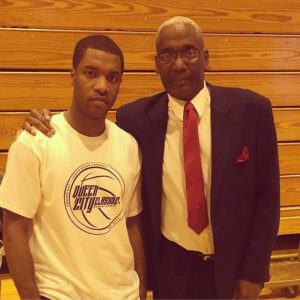
Buffalo Traditional’s Jason Rowe Discusses His College and Professional Basketball Careers and Coaching

“Enjoy the moment. Enjoy the moment and take it seriously. Understand that every decision you make affects the next thing that you do.”


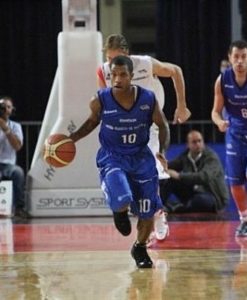
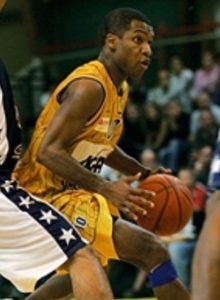
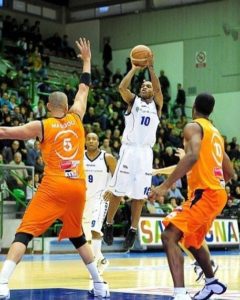
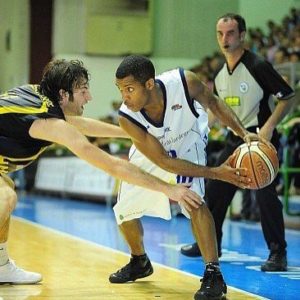
This interview is the second part of my interview with Buffalo basketball legend Jason Rowe. In the first part of our interview we discussed his background, and the run he and his teammates went on at Buffalo Traditional High School in the early- to mid-1990s in our city league, the ‘Yale Cup’ and postseason play. In the second part of the interview we discussed his basketball career after Buffalo Traditional – college, the professional level, and now his current experiences coaching in Western New York. The pictures in this post were shared courtesy of Jason himself. Links to my follow-up video interviews with Jason are at the end of this interview. Finally, The Engineers: A Western New York Basketball Story Part One: Innocent Basketball Dreams is published. Further details are at the end of this interview. 

Anwar Dunbar: It’s been documented that academics prevented some Yale Cup players from going to big time Division 1 schools. What kind of student were you at Buffalo Traditional?

Jason Rowe: I was a ‘Merit’ and ‘Honor Roll’ student. If I wasn’t, I wouldn’t have been able to play. My parents instilled education in me from day one. My mother and father were constantly on me about grades. If my grades weren’t above a certain GPA, then I wasn’t allowed to play basketball. My father actually took me off the ‘Modified’ team at Traditional for half the season because my average was an 87% and not a 90% or better. So in no way shape or form would I say that Buffalo Traditional didn’t prepare me. No!!! My parents prepared me and instilled how important my education was.

AD: That’s actually a big deal. I saw that happen to a couple of players at Hutch-Tech. It seems that if your parents don’t set that high standard, you’ll do just enough to stay eligible to play and, in some instances, just walk that line of eligibility as I did in some classes.

When did the colleges start recruiting you? Were you a sophomore or a junior? Or were they looking at you as a freshman?

JR: I was a sophomore and it just blew up out of nowhere. I remember my first two letters were from Duke University and the University of Michigan. They were ‘generics’, but you couldn’t tell me that I wasn’t being recruited by Duke and Michigan.

AD: How did it feel?

JR: I thought I was the king of the world. Even though they were questionnaires, these were the guys that were on TV. These were Coach Steve Fisher’s (Michigan) and Coach Mike Krzyzewski’s (Duke) signatures right there so it was a big deal.

AD: Where did you end up going?

JR: Loyola of Maryland.

AD: Why did you choose that school?

JR: It felt like home. I got injured at the ‘ABCD Camp’ and a lot of teams didn’t know how serious it was. My back was just ruined. A lot of schools wanted me to sign ‘late’, but I didn’t want to sign late. My mentality is if you want me, you want me now. I didn’t want to wait for them to figure out if another kid was going to sign. I was second or third on a number of college’s boards, but if you say you want me then I felt like, let’s get this thing done. Let’s figure it out. I wanted to focus on my grades and winning the state championship, so I didn’t want to go the whole season with phone calls and distractions.

AD: So signing late is something colleges want you to do when they’re unsure of your health?

JR: All schools have a list of about five to ten people at your position, and it’s in order of how much they want them. I was two, three, or four on a couple of lists, and I wanted to be their number one. If they wanted me, I wanted to make it happen. I didn’t want to wait for someone else to not sign for them to want me. In my brain, that meant they didn’t want me.

AD: So it’s kind of like dating (laughing).

JR: Exactly (laughing).

AD: What were the biggest adjustments you had to make from playing at Buffalo Traditional to playing on the college level and being away from home?

JR: I had family in Maryland so being away from home wasn’t an issue for me. The biggest issue for me was learning the point guard position because in high school we didn’t have any plays. In college now it was about game management – knowing what’s a ‘good’ shot, knowing what’s a ‘bad’ shot, and how to keep your teammates happy. There were so many things that I was lacking that I had to pick up very fast.

AD: Interesting. So when you were at Buffalo Traditional and an opponent threw up a ‘2-3’ or a ‘3-2’ zone defense against you, how would you all approach that if you didn’t have plays?

JR: We knew what to do whether it was running a ‘Motion’ play or a ‘Pick and Roll’. We felt like we were so talented that we could figure it out anyway. We had athletes, ball handlers, big men, and shooters. We had everything so we could chuck up a shot, and with Adrian, LaVar, and Damien – someone was going to get the rebound (see part one of this interview). We could get a three-pointer if we needed it – enough of us could shoot three-pointers. It was sort of like ‘fool’s gold’ because you could get away with it at the high school level, but at the college level, that’s not how it works.

AD: So in college you had to learn how to play the point guard position from more of an Xs and Os standpoint.

JR: Yes, I had to learn how to play basketball.

AD: Did you play all four years?

JR: I played three and a half. I left halfway through my senior year due to grades.

AD: When I was an undergraduate, I do remember sitting in my dorm room one day and seeing Loyola of Maryland on ESPN, and seeing you suited up in your green and white uniform. What did you major in?

JR: Elementary Education.

AD: Did you just encounter a hard series of classes, or was it just juggling being a Division 1 student-athlete?

JR: There was a lot going on in my personal life and I didn’t know how to handle things.

AD: At any point did you dream of playing in the National Basketball Association (NBA)?

JR: Yes, for a very long time. For anyone who plays basketball long enough, that’ s going to be a dream – especially someone who studied it, watched it, and idolized players in the NBA.

AD: In any of your years at Loyola, did you guys make the ‘Big Dance’ (the NCAA’s Men’s College Basketball Tournament)?

JR: The one basketball thing that drives me crazy to this day is not experiencing the Big Dance. Anything else that goes on in basketball is fine, but not playing in the Big Dance drives me insane.

AD: How did you go from playing at Loyola of Maryland to playing professional basketball overseas?

JR: It was through an agency. My college coach gave me a ton of agent letters – dozens and dozens of them and I literally went through all of them, researched them, and figured out which one worked best for me. I literally had an interview process with a couple of agencies and picked an agent that would best help me to further my career overseas and further my basketball career in general.

AD: So you must have done exceptionally well at Loyola for agents to have wanted to sign you.

JR: Prior to my leaving school, I was actually projected late first round and late second round going into my senior year in the NBA Draft. When word gets around, you’ll have agencies calling.

AD: What kind of numbers were you putting up? Were you putting up ‘Triple Doubles’?

JR: I’m trying to remember – my senior year, I was around 25th in the country in scoring, 15th in assists, and 3rd in steals. In my junior year I was 2nd or 3rd in steals, and in my sophomore and senior years it was similar.

AD: What was it like playing professional basketball overseas? Which club or franchise did you play for?

JR: I played in 11 countries for 18 teams. I played 15 years and I don’t regret a thing. It was beautiful.

AD: Wow. So this was all over Europe?

JR: I’m going to try to do it in order. I played in: Cyprus, Israel, Poland, Argentina, France, Italy, Turkey, Spain, Ukraine, and Morocco.

AD: So you were playing against home-grown European players, as well as players from the United States too? Which names come to mind?

JR: Yes. When I was in Turkey, I played against Allen Iverson. In Italy, I played against Danilo Gallinari and Khalid El-Amin. In France, I played against Hollis Price. C.C. Harrison had a big name. I played against Rudy Fernandez when I was in Spain. Lamar Odom signed to a team in Spain, but he didn’t play that night. Manu Ginobli, Marco Bellinelli – I played against those guys. I played against Troy Bell who I’m still friends with. I played against a lot of people.

AD: I remember you posting a picture of you playing against Allen Iverson, also known as ‘The Answer’ on Facebook. What was it like playing against ‘A.I.’?

JR: There’s two sides to it. There’s the ‘wow-factor’, and there’s the competitive part. The wow-factor lasts about five seconds. I walked on the court and I remember looking at him. He’s not bigger than me – maybe an inch taller. His arms are super long and I remember looking at him and thinking, ‘Wow, this was once the best player in the NBA.’ He was for sure one of the best players in the world, and he was no bigger than me. And then it was like, ‘Alright jump ball let’s go.’ It literally happened that fast. You’re in competition mode and you don’t ever want to let your opponent see a weakness. While it was a blessing to be able to share the floor with a Hall of Famer and an icon, the competitiveness kicks in and it’s like, ‘Okay you’ve got to go to work.’

AD: There was always some controversy about whether or not he was 6’.

JR: He’s not 6’ (laughing).

AD: Okay, we’re almost done Jason. One of the common themes in my interviews with some of the former Yale Cup players is wasted and underdeveloped talent. The Buffalo News actually wrote a series of stories on this during your junior year at Buffalo Traditional. With players like you and Damien Foster taking your basketball careers beyond the Yale Cup, what are your thoughts on the challenges of our city league and that era? We didn’t have a solid Junior Varsity program like the suburban and private schools, and most of our ‘league’ games were immediately after school. There were just so many differences between what we had versus the suburban and private schools. Talk about that.

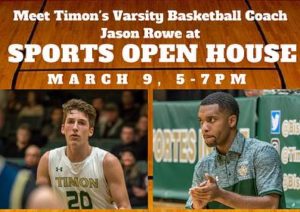
JR: I think that’s a valid argument. Our games at Traditional got moved to 7:30 pm because they were so popular. Being a coach now myself, I do think the development is completely different. I’m in a private school right now – Bishop Timon. The things that I have access to, public schools don’t have access to, and what you said was perfect regarding the development of a Junior Varsity team. Having access to the gym and being able to develop my kids in a particular type of way that public schools don’t have access to – I think it’s unfair, and because of that I think you see the difference between public schools and private schools. One is structured and one doesn’t necessarily have the same structure, because they’re not allowed to do certain things. Because of insurance or whatever the reason is, you see this big difference immediately, and in terms of athletics, I think something needs to be done about that.

AD: Is that something the School Board would have to address?

JR: Yes, because from my understanding, the biggest issue is insurance. That’s what I was told. I’ve always wondered why some schools have access and other schools don’t. It’s unfortunate because for a lot of these kids, athletics is their way out of their toxic situations. So why not have things in place for them to look forward to? If they know that there is an adult or adults who are there in the gym to help develop their minds and bodies to give them a place of peace and tranquility, why not do that? Why not develop these everyday life skills, instead of having these kids with nowhere to go, and no access to anything, and now they’re doing something they don’t need to be doing? I would love to sit in on one of the meetings and get to the bottom of why these things aren’t happening.

AD: I’ve heard you DJ at Dennis Wilson’s Oak Room, but you’re coaching now yourself at Bishop Timon. After your long playing career, how are you enjoying coaching?

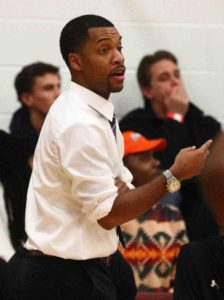
JR: I love it. To be honest, coaching wasn’t something I was looking forward to – I just wasn’t into it. I don’t like stress – the yelling and the screaming. I’m actually a calm coach, and my kids think it’s hilarious. I don’t yell and I don’t scream and yet I know how to get my point across without demeaning or belittling the kids. That works for me, and I relate to my kids the best way that I can and it’s working for our team. We’re having huge success this year. I’ve tried to take my experience from playing for four different coaches and meshing everything together to come up with my own coaching style.

AD: So you’re not a ‘yeller’?

JR: No, not at all, and I get that from my mother. I just give the kids a look and they know when I’m serious or something wasn’t done right. I also demonstrate – I get in the practices and in the drills because I think it’s pointless to tell the kids they did something wrong and not show them the right way. That works for me, and now the kid doesn’t make the same mistake twice. I’m very, very hands on.

AD: How are the kids today different from 20 years ago?

JR: I do training as well, and I’ve been fortunate enough to have a lot of hardworking kids. I think the era as a whole is more concerned about how people view them as opposed to actually getting into the gym and working. I think kids are worried about rankings and social media ‘likes’. Granted it’s a 20-year difference. We didn’t have a phone to let the world know we were in the gym working out, so their mentality is different because they have access to different things. My kids know that when it’s time for practice and training, they have to shut their phones off. When it’s training time give me an hour, and when it’s practice time, give me two hours. After that you can do you what you want to do, but lock into this and we’re fine.

AD: That’s true. We didn’t have Facebook or YouTube twenty years ago.

JR: In the first week of practice I told the kids, ‘Do not worry about polls. Do not worry about rankings. They don’t mean anything. Polls are just a bunch of people’s opinions of who you are. Being ranked No. 1 in November doesn’t mean we’re state championship material.’

AD: Does that mean when you are at Buffalo Traditional, you guys didn’t look at the Buffalo News weekly ‘News Cage Poll’ to see if you were ranked over Cardinal O’Hara, Burgard or John F. Kennedy?

JR: Of course, but as a retired player, a coach and a trainer, I understand that those don’t mean anything. You still have to go out and perform, and do what you need to do.

AD: Is there a difference between the kids you have at Timon versus what you would have if you coached in the Buffalo Public School system (BPS)?

JR: No. I was doing training and I had BPS kids. What works for me is that I respect them and they respect me. Fortunately, I played basketball a long time and I can help them get to where they want to be in terms of this game. Because of that I’m able to keep their attention for an exceptional amount of time. I’ve gone where they want to go, so if was in the BPS I don’t think it would be a big issue.

AD: Is there anything you would change about your playing days?

JR: I would say not failing out of school, finishing my degree and my senior year at Loyola of Maryland. Otherwise, I enjoyed every single time I stepped onto the basketball court – high school, college, rec-center, international – every good game and bad game – I wouldn’t change a thing in terms of my basketball career.

AD: For youngsters aspiring to play basketball or to achieve any other life goal, what advice would you give them?

JR: Enjoy the moment. Enjoy the moment and take it seriously. Understand that every decision you make affects the next thing that you do. When I left school, it affected me possibly not being drafted which led to me going overseas. And I’m grateful to have gone overseas and to have played in fifteen countries, learned so many things, played against so many people. I was able to accomplish so many things and see the world with a basketball which is something I never thought would happen.

But I didn’t understand the effects of decision making. You’re a kid and you think you’re invincible. You leave school, but you don’t understand how much of a domino effect it is, and how one decision affects everything that you do afterwards. It can alter everything in your life, so my advice to youngsters is to really understand the decisions that you’re making with everything you do in life.

AD: Yes, one injury, a violent crime – anything can change your future. I’m sure you saw ESPN’s 30 for 30 about Benji Wilson’s life. He was the No. 1 high school player in the United States in 1984, was on his way to being a college star and then a professional basketball player. And it was all taken away just like that over a stupid argument with two guys on the street he didn’t know, and who had nothing to lose themselves.

JR: When I was in high school I didn’t go out. When I was at Loyola, I didn’t go out to a club until maybe my junior year. I was afraid of losing my scholarship due to being in the wrong place at the wrong time. I went to dorm parties, but I didn’t want the club scene. I didn’t want it.

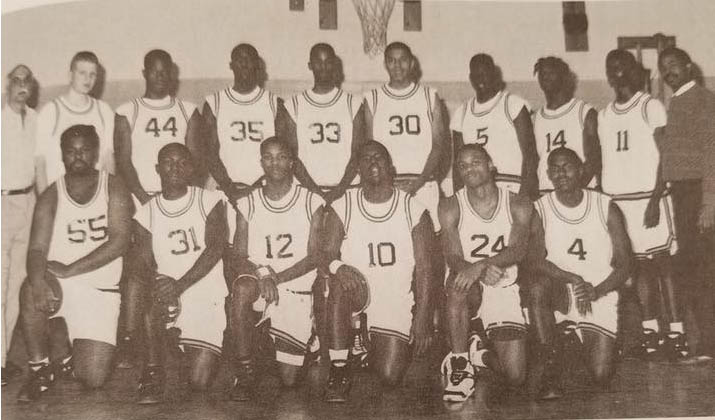
AD: Well Jason, thank you again, and I really appreciate your willingness to talk about your life and playing days. Whether you know it or not, you are royalty, at least as far as I’m concerned. What you guys did at Buffalo Traditional was big and in your successes, you touched a lot of lives – not just at Buffalo Traditional, but also for the rest of us at the other schools – seeing that those types of things could be done and giving everyone else something to shoot for. It was something for the entire area to be proud of – to say that you were there, and that you played against Jason Rowe, Damien Foster, and the Buffalo Traditional Bulls (click on the image below to enlarge it).

JR: You just said something very important, which was that we touched lives. At the time you don’t understand that, but that’s why I also said for the youngsters to be mindful of their every decision because you never know who is watching. That was something that I learned later on in my career – to be mindful, to be in the moment, and to appreciate each moment. There is nothing wrong with stepping outside, smelling the air and saying, ‘Thank you.’ Don’t get caught up in getting flashy rings, a Range Rover and all of those things, because all of that can be taken away from you.

Video Interviews With Jason Rowe

Buffalo Basketball Legend Jason Rowe Discusses Bishop Timon Basketball, Coaching And Training

Buffalo Basketball Legend Jason Rowe Discusses His Playing Days, ABCD Camp, AAU Hoops, And Coaching

The Engineers: A Western New York Basketball Story Part One is available in the eBook, Hardcover and Paperback Editions

I hope you enjoyed this interview. Writing a book was the genesis of my blogging and becoming a video content creator. I have published part one of my book project entitled, The Engineers: A Western New York Basketball Story. It is currently available on Amazon in eBook, hardcover, and paperback formats. The paperback format is available on IngramSpark, and signed hardcover and paperback copies on my online store entitled Big Words Authors via credit payment. Payment using Cash App, PayPal, Venmo and Zelle are also available. Reach out to me for further details. Finally visit the page discussing the book. Please consider visiting it to learn more about the project and see promotional content I’ve created surrounding the project.

Lasting lessons basketball taught me part three: People, teamwork, mental toughness and leadership

This article is the continuation of the series titled the Lasting lessons basketball taught me. Part three will discuss some of the valuable lessons I learned about people, teamwork, mental toughness, and leadership – all of which have implications for succeeding in any group mission and functioning on a team – key aspects in the workplace and in all relationships.

An important life lesson basketball taught me is that people come and go in and out of your life for any number of reasons. In workplaces, there are always going to be people who are unhappy, distraught and discouraged. They may feel that they’re not being used enough, used properly, or are just being overlooked – sometimes for someone who is favored by management. There are always people who feel passed over for promotions that they just knew that they were qualified for, or entitled to get.

In other instances they may feel that they aren’t being given the chance to succeed. This can lead to frustration and even quitting altogether. Once they’ve quit, they may even try to convince you to do the same, but if you’re content where you are, you have to stay and continue to press on in your current station. Malcontents can become cancers that poison their teams. This is something that goes for both platonic and romantic relationships as well.

Regarding teamwork, basketball taught me that the most talented team doesn’t always win, which is always fun to watch when it happens (but not to experience firsthand). When the 2003-04 Detroit Pistons beat the Los Angeles Lakers to win the NBA Championship, they weren’t the more talented team. They were an assembly of interchangeable parts that no one else wanted. They were able to put their egos aside, played together unselfishly, and they bought into a common philosophy while the Lakers fought amongst themselves, and allowed their egos to divide them.

Oh, and speaking of selfishness and unselfishness, just as in basketball, it’s a lot more fun to play with unselfish players than it is to play with selfish players. The same goes for coworkers, friends and significant others. When you feel as though someone is willing to share, respects you, and has your best interests at heart, you tend to want to do more for them. When you’re working with someone whose only concern is their own self-interests, it makes for a difficult partnership.

Basketball taught me that whenever you’re setting out to do something of meaning and substance, you have to be mentally strong as you’ll have to endure criticism and doubt – often from people who are on the sidelines watching. Sometimes it’s because they aren’t doing anything themselves. Sometimes they wish they were doing what it is you’re doing. In some cases they wish they had the opportunity to do what you’re doing. Whate9ver the case, mental strength allows you to keep going through it all.

Basketball taught me that, being a part of a distinct and visible group (like the basketball team) will put a bullseye on your back, and people will ‘gun’ for you even if you haven’t done anything to them. Later in life you may become a: Doctor, a Lawyer, a Division Director, a Manager of some sort, the President of the United States, or even just someone with a lot of responsibility. Once you achieve that level, people will inevitably watch and scrutinize your moves and you have to be ready for that.

“The team, the team, the team,” legendary University of Michigan Head Football Coach Bo Schembechler stressed to his team in one of his most famous pre-game speeches. Schembechler was a wise Coach who came to realize that each player was different, and needed to be motivated differently. Basketball likewise taught me that for any team, whether it’s two people or ten, solid leadership is paramount for any long-term and continued success. Strong leadership can be the difference between members of a team coalescing and becoming their best selves, or falling apart into bits and pieces.

Lastly, not every leader leads the same way. That goes for: athletics, government, the corporate world or any other arena in life that requires teamwork. I didn’t understand this aspect of leadership as a teen on my high school basketball team. Then, a couple of years ago I watched ESPN’s 30 for 30 documentary titled I Hate Christian Laettner – a story about Duke University’s most storied college basketball player, and arguably the best college basketball player of all time whom few people outside of the Duke fan base liked – his teammates included.

It turned out that Laettner was a bit of bully towards teammates – particularly Bobby Hurley, and Grant Hill who resented him at times. There was a method behind his madness though. It was his way of challenging them, making them tougher, and pulling out their best play. Sometimes leaders just want to see how driven and mentally strong you are, and how you’ll respond under pressure. Rising to the test ultimately creates a much, much stronger team.

This article will be continued in part four of the Lasting lessons basketball taught me. If you enjoyed this post, you might also enjoy:

Lasting lessons basketball taught me part one: An introduction
Lasting lessons basketball taught me part two: Life lessons
Jason Rowe discusses Buffalo Traditional Basketball, the Yale Cup and State Tournaments
Chris Herren discusses his journey, drug addiction, substance abuse and wellness

Thank you for taking the time to read this blog post. If you’ve found value here and think it will benefit others, please share it and or leave a comment. To receive all of the most up to date content from the Big Words Blog Site, subscribe using the subscription box in the right hand column in this post and throughout the site. Lastly follow me on the Big Words Blog Site Facebook page, on Twitter at @BWArePowerful, and on Instagram at @anwaryusef76. While my main areas of focus are Education, STEM and Financial Literacy, there are other blogs/sites I endorse which can be found on that particular page of my site.

Lasting lessons basketball taught me part two: Life lessons

This post is the continuation of the series titled the Lasting lessons basketball taught me. In part two, some of the important life lessons basketball taught me will be discussed. Some of these lessons will come from or be related back to author Charles J. Sykes’s book, 50 Rules Kids Won’t Learn in School.
The biggest lesson basketball taught me is rule number one from Mr. Sykes’s book, “Life is not always fair. Get used to it.” The game taught me that even though you can spend hours upon hours dreaming and preparing for a goal of some sort, an unforeseen calamity can come along and snatch away that goal. For me that calamity was an injury, but in the real world it can be anything, and often times it isn’t fair.

Basketball taught me rule number four from Mr. Sykes’s book, “You are not entitled.” Putting in your time at a job or even your degree level does not guarantee you advancement in your career in every case. Coaches and supervisors are usually looking for the most talented person (s) and will usually show favor to that person at the expense of others, regardless of seniority. So it’s always important to put out your best and not expect things because you’ve been there for a while.

Basketball taught me that sometimes other people’s decisions can affect your life for better or for worse. Sometimes people don’t consider the consequences for everyone else when they make decisions and do certain things. Whether it’s a teammate, a relative, a coworker or even a significant other, sometimes decisions are made that adversely affect the team, and its times like that that you realize another difficult life lesson; there are some things in life that you have no control over, but you have to deal with the consequences somehow. This relates right back to the first life lesson.

Rule number ten from Mr. Sykes’s book states that, “Life is actually more like Dodgeball than your gym teacher thinks.” He goes on to state that, “It comes at you quickly; it requires alertness and skill; the outcome is unpredictable; the weak can sometimes overcome the strong; it involves elimination and has both winners and losers.”

Likewise and easily relatable to rule number 10, basketball taught me that not everyone plays fair and many people seek to gain any advantage they can whenever they can, especially when the referee is not looking. The same is true in the adult world. People have different concepts of what is fair and ethical and can surprise you when they do things to you that you wouldn’t do to them on the job and in relationships.

Lastly, basketball taught that hindsight is 20/20. Often when you are in the actual game or life situation, you make decisions and react based upon what you’re seeing and experiencing in that particular moment. However when the game is over, and you have a chance to look back at the film and what you might have done differently, everything looks so much more clear. It’s the exact same way in the game of life.

This article will be continued in part three of the Lasting lessons basketball taught me. If you enjoyed this post, you might also enjoy:

Lasting lessons basketball taught me part one: An introduction
Jason Rowe discusses Buffalo Traditional Basketball, the Yale Cup and State Tournaments
Chris Herren discusses his journey, drug addiction, substance abuse and wellness

Thank you for taking the time to read this blog post. If you’ve found value here and think it will benefit others, please share it and or leave a comment. To receive all of the most up to date content from the Big Words Blog Site, subscribe using the subscription box in the right hand column in this post and throughout the site. Lastly follow me on the Big Words Blog Site Facebook page, on Twitter at @BWArePowerful, and on Instagram at @anwaryusef76. While my main areas of focus are Education, STEM and Financial Literacy, there are other blogs/sites I endorse which can be found on that particular page of my site.

Jason Rowe Discusses Buffalo Traditional Basketball, The Yale Cup, and State Tournaments

“Our goal was to win the state championship. It was my personal goal and the team’s goal as well. When you have that goal, you get that ‘tunnel vision’!” 

One of the key principles of my blog is Creating Ecosystems of Success. A key pillar of creating them is hearing the stories and experiences of those who have made it to where we want to be. Like many kids, an early dream of mine was to play basketball. That dream didn’t reach fruition, but the lessons I learned playing in the Buffalo Public Schools’ Yale Cup high school city basketball league laid the groundwork for me to go on to further my education and start my science career.

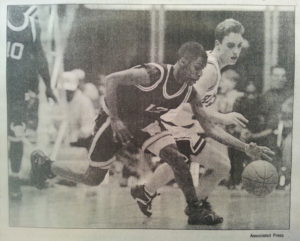
The Engineers: A Western New York Basketball Story Part One: Innocent Basketball Dreams is published. Further details are at the end of this interview. On February 2, 2018, I had the honor of interviewing Jason Rowe – a Buffalo basketball legend who sits on the ‘Mount Rushmore’ of Yale Cup players with the likes of: Trevor Ruffin, Ritchie Campbell, Marcus Whitfield, Curtis Aiken, Ray Hall and Cliff Robinson. Jason spearheaded Buffalo Traditional High School’s ascension to the top of Section VI basketball, leading his Bulls to the Far West Regional each of his four years, and then to State Tournament in Glens Falls, his final two before winning it in his senior season.

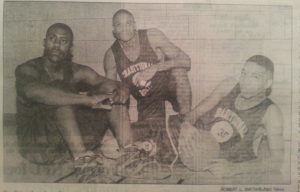
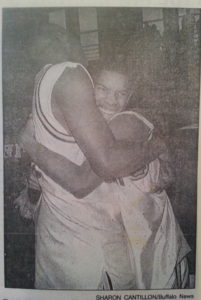
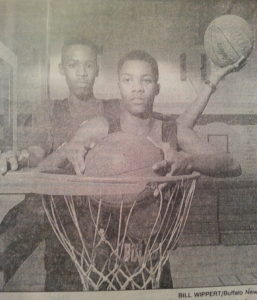
In part, one of this two-part interview, we discuss his background, and his storied playing days at the Buffalo Traditional High School.  The pictures in this interview come from an archive of Section VI basketball assembled over the years from issues of the Buffalo News by my first Coach at Hutch-Tech High School, Dr. Ken Jones. Links follow up video interviews with Jason are at the end of this interview.

Anwar Dunbar: Thank you for this opportunity to interview you, Jason. I’m working an ambitious writing project about my high school basketball experience. It was my first major success and failure life lesson. While I didn’t play organized basketball beyond the 1993-94 school year, my high school experience on our team at Hutch-Tech gave me the tools I needed to earn my Ph.D. in a STEM-field – not quitting during the hard times, dealing with adversity, finishing what I started, and so on.

In my project I also tell the story of the Yale Cup in that era, and you can’t properly tell it without discussing the Buffalo Traditional Bulls as you guys were the premiere program/team. As a part of my research, I’ve reached out to some of the other Yale Cup players to gain insight to what it was like playing at Bennett, City Honors, Kensington, Riverside, and others. But to talk to you is like talking to Jordan (laughing).

Jason Rowe: That’s a lot of pressure (laughing), but I’m happy to help out.

AD: Okay, so let’s start. As you know, the Buffalo News wrote extensively about you in the early to mid 1990s. They particularly talked about your father, Jerry, and your Uncle Lester being very influential in your development as a basketball player. At what age did you start playing basketball? Did they put a basketball in your crib as a baby?

JR: It’s funny you should say that because that’s literally the story I was told. When I came home as a baby, there was a basketball hoop on the wall in my crib and my father used to pick me up and have me dunk the basketball as a kid.

AD: Was your father a basketball player?

JR: Yes. He played locally, but he didn’t pursue it at a higher level. My uncle and I were the ones who were fortunate to go on to play in college, and to make some money from it.

AD: So you would describe your upbringing as being similar to that of a Stephon Marbury where basketball was literally in your family?

JR: Yes. All of the males in my family – myself, my uncle, my father, and James Rowe my cousin, who was an athlete at Lafayette High School. He played football, basketball, and I believe he ran track too. My brother, Jeremy, played football, basketball, and he ran cross country at Buffalo Traditional. My whole family was athletic.

AD: When you were playing middle school basketball, were you already in camps and clinics?

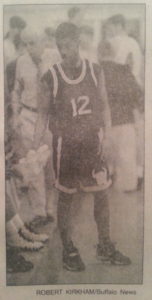
JR: I went to the University of West Virginia’s basketball camp as a kid. I went to the local camps at Canisius and the University at Buffalo. I was actually at Georgia Tech’s camp the moment Kenny Anderson got drafted into the National Basketball Association (NBA). As a kid I was a huge Kenny Anderson fan, and that’s why I wore number 12 in high school.

AD: Were there any other college and professional players that you looked up to?

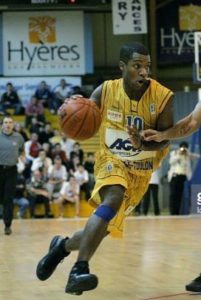
JR: Jordan, Isaiah and Magic were the guys that I idolized in the NBA. In college I looked up to Kenny Anderson, Jason Kidd and Chris Jackson. Locally, I looked up to my uncle, Trevor Ruffin  (pictured to the left), and Ritchie Campbell. I looked at them and felt like I could do something. They were guys I could watch every day in a ‘hands on’ type of way. Trevor grew up across the street from me and he was like a ‘big brother’. He played at the University of Hawaii and he went on to the NBA, but I didn’t look at him that way. This was the guy who, when he was in the NBA, would pick me up to go work out with him. We had that type of relationship where he was my big brother, and I was going in the house and watching TV with him.

AD: Were you familiar with some of the other Yale Cup and Section VI stars who came before you like Ritchie Campbell and Marcus Whitfield?

JR: I grew up watching those guys so I idolized Ritchie, Nigel Bostic, and Marcus Whitfield. I vaguely remember Ray Hall. My experience with him was in the summer leagues. But as far as the big name guys who were in the Yale Cup, I knew them because my cousin, James, was eight years older than me. So he grew up in that era and took me to those games because he played at Lafayette. I was able to get my experience watching those games as well.

AD: Did anyone in your circle talk about Christian Laettner?

JR: I heard stories about Laettner, but I wasn’t around him that much. I was at that infamous game between Nichols and South Park where the fight broke out, but I was too young to remember it.

AD: Being at Traditional for middle school, what made you decide to stay for high school? Is that just what the students did there?

JR: I wanted to have my own name. Traditional was home for me. They had some success leading up to that time and I knew everyone on their team. I wanted to be a part of that, so for me it didn’t make sense to go anywhere else.

AD: Yes, every year Coach Joe Cardinal’s teams were making deep runs in postseason play – a couple of times to the State Tournament. Did you and Damien Foster plan to attend Buffalo Traditional together, or was it a random decision?

JR: We grew up in the Masten ‘Boys Club’. The basketball circle is very small. We became friends and started playing there together. I want to say that he was going to go to McKinley first, but he decided to come to Traditional and it definitely worked out for everyone involved.

AD: For me, you guys came out of nowhere. I wasn’t in the ‘basketball circle’ you described, and I didn’t know who you guys were. Thus, the first time I saw you play was when you guys came to play us at Hutch-Tech in January 1993 and smacked us 96-73. It was right after Cameron Calvin died, and it coincided with the University of Michigan’s storied ‘Fab Five’. We had an all upperclassmen starting lineup and getting routed by you guys like that was a backbreaking loss for the players and our coach. I watched it all unfold on the bench due to an injury, and I even looked at the tape numerous times afterwards in awe. Play after play, you guys just made it look easy. Many freshmen are scared in Varsity competition, but you guys looked so fearless. What was your mentality as a freshman?

JR: It’s funny that you mentioned Michigan’s ‘Fab Five’. If you pull up the videos and pictures of us at Buffalo Traditional, we mimicked the Fab Five – the big shorts and the black socks. My mentality personally was to be the best ballplayer I could be. I grew up around Trevor Ruffin and my uncle so inside the home, the pressure to succeed was one of the things that drove me personally. I was fortunate enough to have that basketball success around me – my big brother was an NBA player, and my uncle was a legend who played Division 1 basketball and then overseas. So when you walked into that house you had to bring something to the table. You can’t just sit there and say, ‘I had 10 points today.’ You had to win convincingly and put up some numbers. As a team and as freshmen we were happy to compete and do well, but I don’t think we knew how good we would become and the success we would have. You’re 14 years old and you want to win, but you don’t really understand how far it can take you.

AD: I imagine you guys caught a lot of teams like that. Riverside won the Yale Cup the year before, and if I recall you all beat them. You had two seniors on that team, Andre Montgomery and Jeff Novarra, along with you younger guys. How did you guys blend it all together?

JR: I was in the school so I was familiar with Andre and Jeff already. They were instrumental in our success my freshman year. Jeff was our shooter, and Andre was like our ‘Draymond Green’ – he was undersized, but he could do a little bit of everything. They were very good leaders.

What also helped us was that a lot of us played together outside of Buffalo Traditional. We were always at the Boys Club – myself, Damien, Damone White, who unfortunately has passed away – we were always together playing. It’s kind of like we weren’t surprised because we knew how each other played and our mentality. No one else really knew. We knew how to compete, we just didn’t know we were going to knock off so many teams and make a name for ourselves. We just wanted to win.

AD: As you know, whenever you experience a high level of success, you’re going to have critics as well. I’m sure you guys heard similar chatter, but one of my teammates at Hutch-Tech once told me about how your Coach, Joe Cardinal, would just go into his office and read the newspaper while you guys played ‘pickup’ basketball during practice every day (laughing). What was the Traditional team like? Was it a thing where Coach Cardinal just put the ball in your hands and let you go or was there more to it?

JR: Coach Cardinal was very honest when he would say, ‘I’m a gym teacher, and I don’t know much about basketball in terms of coaching.’ Because he was so open and honest, and didn’t try to hide that, it actually made us closer. He wasn’t lying and trying to be something he wasn’t. He was the most personable coach I ever played for because he had our backs and we knew that. In terms of Xs and Os, no he wasn’t that knowledgeable so it’s no surprise that we didn’t learn certain things.

In tight situations, he would tell us to, ‘run a pick and roll,’ or something very basic – nothing complex. Fortunately for us, we were able to beat a lot of teams by a lot of points, so there weren’t a lot of tight games. When the games were tight I was able to use some of the things my father and uncle taught me.

AD: Were there any other coaches on that staff that made a difference?

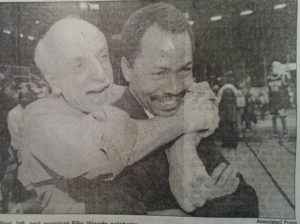
JR: Ellis Woods, who was the coach’s best friend. They were cut from the same cloth, and were very open and honest with us about what they did and didn’t know. We would run through a brick wall for both Coach Cardinal and Coach Woods. They could relate to us.

AD: My junior season was cut short due to grades, an injury and not knowing how to deal with adversity, but I kept my eyes on what was happening in postseason play. I remember watching the news at night and seeing your team march all of the way to the Class C “Far West Regional”. You guys beat Starpoint, Newfane, Portville and then top-seeded John F. Kennedy 71-67 to win the Section VI Class C Championship as mostly freshman and sophomores. Some kids never made the sectionals at all, and the core of your team won yours as freshmen and sophomores. What was that ride like?

JR: Our goal was to win the state championship. It was my personal goal and the team’s goal as well. When you have that goal, you get that ‘tunnel vision’! We used to say, ‘Get to Glen. Get to Glen. You’ve got to get to Glens Falls.’ That’s where the State Championship was held. For some time the Buffalo teams were having a hard time getting past the Rochester teams in the Far West Regional. We wanted to get past Rochester. For us, we had a lot of confidence because we played against the top notch competition in Buffalo. We were confident enough to get past Buffalo’s competition and we just had to beat the Rochester teams. It was step by step.

AD: It was the Marion team in your freshman year and the Mynderse team in your sophomore year you faced in the Far West Regional – were they bigger? Were they better?

JR: Everything. I think what we lacked is what they exploited. They had the structure we didn’t have. They were big and physical, and they just outworked us. I cried a lot after those two games. I shed a lot of tears. They were well deserved victories for them.

AD: Unfortunately, I didn’t go to that Mynderse game which was at UB’s Alumni Arena, but I did see the highlights and recognized one of the guys Damien Foster was jawing at after hitting a three-pointer. I played with some of those guys at the ‘Ken Jones Basketball Camp’ – my coach’s camp which a lot of Rochester area players attended. I imagine just seeing the clash of styles must have been amazing.

JR: You had this fast paced team versus this half court, slow it down type of team – two completely different styles of basketball.

AD: Yes, you guys were clearly more athletic and more talented. I imagine they were patiently working the ball on offense, and slowing the game down.

JR: They were physical. I remember them being very physical.

AD: So you guys beat Lyons in your junior year in the Far West Regional 74-71, you willed the Bulls to victory against Mechanicville in the state semifinals 81-72, before matching up against Elton Brand and Peekskill in final game. What was the key to beating Lyons? Had you guys just been there two years and you were ready?

JR: I would say that it was the pain of losing in the Far West Regional those first two years and not being able to get over the hump. We felt like it was our time and we wanted that victory more than anything else in the world. Lyons might have been No. 1 in the state that year too, and for a team that was easily motivated like us, we’d had enough.

AD: Your team went on to suffer a heartbreaking 94-85 loss to Peekskill in a public state final game, and then you graduated veterans Adrian Baugh, LaVar Frasier and Jimmy Birden who were featured in the Buffalo News during the playoffs that season. Was it hard to get back to the State Tournament the next year? Or did you and Damien just not miss a beat?

JR: It was hard in the sense that it’s just not easy getting there period. But in terms of remaining focused and knowing that the State Championship is what we wanted, the mental part wasn’t hard, but the physical part was hard. You have to play 20 games just to get to Glens Falls – that’s just getting there. The game by game process was hard, but the mental aspect wasn’t difficult. When we lost to Peekskill, I remember telling the Buffalo News before I walked off the court, ‘We’ll be back,’ and I meant that.

AD: I imagine all four years were fun, but was there one that stood out above the rest? Was it in your senior year when the team won the Class C State crown 62-48 over Mechanicville, and then the Class C Federation crown 92-71 over Collegiate of New York City?

JR: Yes, that was the year that we won. It was fun, but it was also bitter sweet, because I remember when we won a lot of us were crying tears of joy, but we also understood that it was over – our run was over and that it was our last game together. Our team was very, very close.

AD: As I mentioned earlier, you guys lost the three seniors from your junior year, but you still had a strong supporting cast which included guys like: Damone White, Darcel Williams, Jamar Corbett, and Darnell Beckham.

JR: To me Darcel was our ‘X-factor’. We had a good team. We had guys graduate in different years, but everyone stuck together during that time so we already had that bond and that chemistry. So by the time Adrian, LaVar and Jimmy graduated, the other guys were ready because they already had experienced playing in big games. That’s why, in my senior year, we were just running through teams. It was insane.

AD: You and Damien were talked about synonymously – Damien Foster and Jason Rowe, Jason Rowe and Damien Foster. What was Damien like? Did you guys have to talk about who was going to get the last shot? Who was going to get the majority of the shots? Was your chemistry just natural?

JR: I had two personal goals going into high school; I wanted to get 1,000 assists and I wanted to win the State Championship. So passing the ball – I didn’t have an issue with that, and fortunately for us, we blew so many teams out that it was never an issue regarding who got the last shot. There is no issue when you’re up 10, 20, or 30 points – we won so many games convincingly that we never argued about who was going to get the last shot. Again, I wanted the assist, so on fast breaks I’d throw the ball backwards to set up someone else.

AD: Talk a little bit about the Bennett game in your junior year – the 69-68 thriller where you guys lost to the Tigers. Periodically, I still see guys talking about it on Facebook. Did you overlook them?

JR: We didn’t overlook anyone. It’s hard to overlook teams when you go into their gyms and their teams have pep rallies. We knew every team was gunning for us. We knew that we were going to get everyone’s best shot so we came ready to play every single game. That night Bennett played well. It’s a great game and I actually watch it from time to time. It was a great game.

AD: Were there any other players that you especially look forward to playing?

JR: I liked playing against LaSalle’s Tim Winn, Burgard’s Jeremiah Wilkes, Cardinal O’Hara’s Ryan Cochran, and Turner/Carroll’s Malik Campbell. We were all friends. We would play against each other one day and be friends, and then completely hate each other on the court the next time. We were all very, very, very competitive. When you have competitors competing at that high level, it just makes for some great basketball.

AD: In your junior season, the Buffalo News also wrote a piece actually comparing you and Tim Winn as you two were the top two point guards in Western New York. If I recall, he actually hoped to team up with you in Empire State Games at one point. Did your two teams ever match up allowing you to go head to head – Buffalo Traditional vs. LaSalle?

JR: Tim was hurt when we were supposed to play. That was a game everyone was looking forward to, and he had sprained his ankle the week of the game in practice.

In the second part of our interview, Jason and I discuss his basketball career after being a Buffalo Traditional Bull. I want to thank Jason for taking the time out of his busy schedule to participate. After completing this interview, I realized that there are other historical significances to what we discussed here, beyond the basketball court. Just as the city of Buffalo has changed since the early 1990s, so has its school system. Two schools that were a part of our Yale Cup of the early 1990s no longer exist. One is Kensington High School. The second is Buffalo Traditional High School where Jason played. While the building still sits there on East Ferry Street, it is now the home for the Buffalo Academy for the Visual and Performing Arts.

Video Interviews With Jason Rowe

Buffalo Basketball Legend Jason Rowe Discusses Bishop Timon Basketball, Coaching And Training

Buffalo Basketball Legend Jason Rowe Discusses His Playing Days, ABCD Camp, AAU Hoops, And Coaching

The Engineers: A Western New York Basketball Story Part One is available in the eBook, Hardcover and Paperback Editions

I hope you enjoyed this interview. Writing a book was the genesis of my blogging and becoming a video content creator. I have published part one of my book project entitled, The Engineers: A Western New York Basketball Story. It is currently available on Amazon in eBook, hardcover, and paperback formats. The paperback format is available on IngramSpark, and signed hardcover and paperback copies on my online store entitled Big Words Authors via credit payment. Payment using Cash App, PayPal, Venmo and Zelle are also available. Reach out to me for further details. Finally visit the page discussing the book. Please consider visiting it to learn more about the project and see promotional content I’ve created surrounding the project.

Lasting lessons basketball taught me part one: An introduction

The first principle of my blog is “Creating Ecosystems of Success”. I originally published this series on the Examiner back in 2014, and with ‘March Madness’ upon us yet again I’ve decided to republish it. As a teen I had dreams of being a basketball player just like a lot of kids – a dream one must have lots of ability, drive, and luck to achieve. I didn’t play basketball beyond high school, but the lessons I learned on my high school team – not all of them happy and pleasant, helped me as I progressed into adulthood and into my Science, Technology, Engineering and Mathematics (STEM) career. I’m actually working on an ambitious writing project chronicling that journey. The themes of that project are captured in this four-part series.

* * *

Dr. Ken Jones my high school basketball coach was a true student and scholar of the game. In addition to teaching us as much as he could about the fundamentals of basketball, he was also interested in the psychology of sports and wanted to teach life skills to his players. He frequently told us, “As much as I want you guys to become good basketball players, I also want you to become good people.”

Right around the time of tryouts one year, he gave all of us an article from USA Today titled; The joy of victory is why sports exist, by Jeff Riggenbach. While the author argued that the main reason for competition is the thrill of victory, he also stated, “One of the principal reasons we like to see kids get into sports in the first place is what they can learn from the experience right?”

Important lessons they learn include:

• How to set a goal and work toward it
• How to coordinate their own efforts with those of their teammates
• How to achieve and maintain the flexibility to respond to the ever-changing moment
• Making quick alterations in plans, strategies and tactics

He continues, “These are lessons that would benefit anyone, not only on the playing field or court, but also in business, politics and every other sphere of human life. To learn these lessons, you don’t need to win, necessarily. But you do need to want to win, and you do need to try with all of your might to win.”

Though unable to play even pickup basketball these days for medical reasons, the game is still frequently on my mind; the Xs and Os, the strategies, and the longing for that feeling of competition. Most importantly the many lessons the game taught me about life are always fresh on my mind. With March Madness upon us, this next series will discuss the lasting lessons basketball taught me about life, people and success, and how those lessons have translated into the adult world.

Some of the best memories of my life were my years on my high school basketball team at Hutch-Tech High School in Buffalo, NY. Similar to some of my teammates at that time, it was an experience that didn’t go exactly as planned. Even though it had its share of heartbreaks, it was also a molding experience for me and those experiences have continued to play out throughout my life well after high school.

The players and arenas have changed with every new experience, but the themes and lessons have translated into adulthood. Learning about dribbling, hook shots, and proper defensive techniques were fun, but basketball taught me so much more. It taught me about the most important game of all, the game of life.

Even for young people who don’t go on to play big time college sports, participating in high school interscholastic athletics can be a very rewarding experience which can impart important life lessons. Most of these lessons will translate into the adult world, the workforce and interpersonal relationships. This series will therefore be a reflection on the lessons basketball taught me and how they’ve translated into my life, my career and my many relationships with people along the way. The lessons will be broken up into the following categories:

• Life lessons
• People, Teamwork and Leadership
• Success in life

Many of these lessons are universal and could be gleaned for example from the documentary Hoop Dreams, a very moving film for me which tracked the high school basketball careers of Arthur Agee and William Gates in the early 1990s. Though their basketball careers were much more successful than my own, their experiences, trials and tribulations were similar in many ways to my own.

This series will be continued in part two of the Lasting lessons basketball taught me. Thank you for taking the time to read this blog post. If you’ve found value here and think it will benefit others, please share it and or leave a comment. To receive all of the most up to date content from the Big Words Blog Site, subscribe using the subscription box in the right hand column in this post and throughout the site. Lastly follow me on the Big Words Blog Site Facebook page, on Twitter at @BWArePowerful, and on Instagram at @anwaryusef76. While my main areas of focus are Education, STEM and Financial Literacy, there are other blogs/sites I endorse which can be found on that particular page of my site.


The Best Apps for Crypto Investment

I am pleased to present my first guest post for the Big Words Blog Site. It comes courtesy of Michael Kordvani, the Head of Search Engine Optimization (SEO) of the App development agency Fueled, and it discusses the best Apps for ‘Cryptocurrency’ (Crypto) Investment – a topic related to two of my posts which discussed both Bitcoin and Blockchain Technology. While this post recommends the best Apps for financial transactions using cryptocurrencies, it is worth noting that the Big Words Blog Site is not involved in rendering personal financial advice to readers and is thus not liable for any financial decisions made by readers.

* * *

There are now loads of different cryptocurrencies to invest in, but how do you keep track of all your investments, and the changes in the market?

No doubt you’ll want to use your smartphone to manage your crypto investments. While we’re not always in front of our PC, we’ve usually got our smartphone to hand, and when it comes to cryptocurrencies, things can change fast. Being able to access your investment data quickly, any time you like, wherever you are, is pretty much vital.

Blockchain development has been highly concentrated in the area of crypto investment apps, so you have plenty of choice when it comes to apps to use. Here’s our pick of some of the best apps for managing your crypto investments…

Coinbase

If you’re new to crypto investment, then Coinbase is a good choice as it’s very easy to use. Setting it up and then making sense of the information displayed is very simple. It’s very popular at the moment with more than 10 million customers using their system.

Gemini

Gemini is another popular choice, and currently benefits from slightly lower fees than Coinbase. This is an intuitive app with lots of reporting capabilities and some great graphs to help you make sense of all the information it presents.

Blockfolio

Blockfolio is particularly useful for anyone with a diverse portfolio. It’s a powerful tool that can seem complicated at first, but it’s well worth spending the time getting to grips with it if you’re dealing with a wide range of investments across several cryptocurrencies. Blockfolio tracks more than 800 different cryptocurrencies and sends push notifications to your smartphone when levels reach your predetermined threshold.

Investing.com Cryptocurrency

If you tend to trust apps from long established companies, then take a look at Investing.com Cryptocurrency. This company has been giving us investment advice for over 10 years now so it’s no surprise they’ve moved into the cryptocurrency market too. Through their app you can track 1300 different cryptocurrencies in real time, and you have the advantage of seeing historical data too. This app will also allow you to set alerts for when your goal price has been reached.

Bitcoin Wallet from BTC

This app from BTC is easy to use and is nicely designed to be simple yet efficient. It’s very secure and has reasonable transfer fees. It offers a good backup system, so you’ll never lose your data, and you can also transfer Bitcoin via QR reader. This app only deals with Bitcoin though, so if you’re investing in other altcoins, then you will probably want to look at our other recommended apps rather than this one.

Xapo Wallet

If security is top of your priority list when choosing a crypto investment app, then they don’t come much more secure than Xapo Wallet. The Wall Street Journal described their security as ‘the Fort Knox of cryptocurrency storage’. It gives you three layers of security and it’s also very easy to use with a smooth interface.

BitTrade Scalping Terminal

BitTrade Scalping Terminal is ideal for those of you who want to make big profits on the small price movements that are so common in the cryptocurrency trading world. It is a cryptocurrency scalping tool that boasts a clean interface, demo trading option for those of you who are new to the process to learn the ropes with, and best of all, it’s browser-based so you don’t even need to download it.

A Black History Month Look at West Indian Archie: A Story of Wasted Scientific Potential in the Inner Cities of the United States

“People in the inner cities are naturally creative and inventive often times out of necessity.”

A Quick Plug for My Book

Hello. Thank you for clicking on this link, and I hope you enjoy this essay. Writing a book was the genesis of my blogging and becoming a video content creator. I have published part one of my book project entitled, The Engineers: A Western New York Basketball Story. It is currently available on Amazon in eBook, hardcover, and paperback formats. Shortly I will be selling signed hardcover and paperback copies on my online store entitled Big Words Authors. You can place an order now if you want a signed copy. There is also a page discussing the book. Please consider visiting it to learn more about the project and see promotional content I’ve created surrounding the project. And now on to our feature presentation.

An Important Character in Malcolm X’s Story

I originally published this piece on the Examiner in February of 2016.  It is not about a Science, Technology, Engineering and Mathematics (STEM) practitioner or inventor per se, but instead it is a look at an individual who had the potential to practice science.  Because of life choices and circumstances however, he used his intellectual gifts for criminal activities.  This person is an example of the wasted intellectual ability in the United States’ inner cities and also something my father talked about which was that, “People in the inner cities are naturally creative and inventive often times out of necessity.”

Harlem’s Master of Memorizing Numbers

West Indian Archie was portrayed by Delroy Lindo, in Spike Lee’s Malcolm X starring Denzel Washington.  Though he was a minor character in the movie and in Alex Haley’s The Autobiography of Malcolm X, West Indian Archie holds several significances, particularly in the realm of science.  Many of these significances are extremely relevant today in an era where there is a great push to get underrepresented minorities involved in STEM.

Malcolm X (then Malcolm Little) first met West Indian Archie in New York city prior to converting to Islam and dedicating his life to Civil Rights.  West Indian Archie was one of the bigger players in the ‘Numbers’ game in Harlem who had done time up the Hudson River at Ossining State Prison best known as ‘Sing Sing‘.  He eventually took Malcolm under his wing and taught him the Numbers game, and used the novice in his illegal activities.

West Indian Archie had the amazing ability memorize long sequences of numbers such that he never had to write them down.  He in fact warned Malcolm never to write his customer’s numbers down to minimize the potential for incriminating evidence should he get apprehended by the police.  As with most street partnerships, theirs eventually crumbled due to greed and ego, and Malcolm Little eventually fled Harlem to save his own life.

After Malcolm Little converted to Islam and became Malcolm X, he later found West Indian Archie close to death and the two reconciled their differences.  After educating himself in jail and gaining a new perspective on the world, Malcolm X realized that someone like West Indian Archie with his ability to memorize long sequences of numbers, could have used his talent to become any number of things particularly in the sciences. He could have become a physicist, an astronaut, a mathematician, etc.  He realized that in blighted urban areas all over the United States there were similar minds with the abilities to practice science that were wasted and used in things like criminal activity by default–a challenge we still face today.

Delroy Lindo Reflects on Portraying West Indian Archie

A powerful thing to hear is an actor/actress reflect on playing a character. Delroy Lindo reflects on portraying West Indian Archie in the YouTube video embedded below. He discusses the significance of the character in addition to being a part of Spike Lee’s legendary film on Malcolm X.

The Engineers: A Western New York Basketball Story Part One is available in the eBook, Hardcover and Paperback Editions

Writing a book was the genesis of my blogging and becoming a video content creator. I have published part one of my book project entitled, The Engineers: A Western New York Basketball Story. It is currently available on Amazon in eBook, hardcover, and paperback formats. The paperback format is available on IngramSpark, and signed hardcover and paperback copies on my online store entitled Big Words Authors via credit payment. Payment using Cash App, PayPal, Venmo and Zelle is also available. Reach out to me for further details. Finally visit the page discussing the book. Please consider visiting it to learn more about the project and see promotional content I’ve created surrounding the project.

A Black History Month Look at NASA’s Lieutenant Colonel Michael P. Anderson

A Quick Plug for My Book

Hello. Thank you for clicking on this link, and I hope you enjoy this essay. Writing a book was the genesis of my blogging and becoming a video content creator. I have published part one of my book project entitled, The Engineers: A Western New York Basketball Story. It is currently available on Amazon in eBook, hardcover, and paperback formats. Shortly I will be selling signed hardcover and paperback copies on my online store entitled Big Words Authors. You can place an order now if you want a signed copy. There is also a page discussing the book. Please consider visiting it to learn more about the project and see promotional content I’ve created surrounding the project. And now on to our feature presentation.

The Black Astronauts

While there are actually quite a few black astronauts, two names that immediately come to my mind are Mae Jemison and Ronald E. McNair. The TRIO program which led me to my graduate research was actually named after Ronald E. McNair who died during the tragic launch of the Space Shuttle Challenger STS-51-L.

Discovering Lieutenant Colonel Michael P. Anderson

Since volunteering at the David M. Brown Arlington Planetarium, I’ve become aware another black astronaut, Lieutenant Colonel Michael P. Anderson. Michael P. Anderson was a member of the crew of the Space Shuttle Columbia STS-107 which disintegrated upon re-entry into the earth’s atmosphere on February 1, 2003. Anderson served as the payload commander in charge of science experiments on the Columbia.

A biography of astronaut Michael P. Anderson is readily available on line, but just briefly, he was born into a military family in Plattsburgh, NY but grew up in Spokane, Washington. He earned his Bachelor of science degree in physics and astronomy from the University of Washington in Seattle in 1981, and in 1990 he was awarded his Master of science degree in physics from Creighton University. Colonel Anderson entered NASA by way of the United States Airforce where he was selected for astronaut training being one of the 19 candidates selected from 2,962 total applicants. Prior to the STS-107 mission, Anderson participated in the STS-89 Endeavour mission.

The Columbia STS-107 Crew

The Space Shuttle Columbia STS-107 disaster occurred due to critical damage to the shuttle’s ‘orbiter’ when foam from the fuel tank’s insulation fell off and tore a hole in Columbia’s left wing. During re-entry, the hole allowed super-hot atmospheric gases to penetrate the orbiter’s wing, leading to its destruction. The other astronauts in the crew included:

• Rick D. Husband
• William C. McCool
• Kalpana Chawla
• David M. Brown
• Laurel Clark
• Ilan Ramon

The picture of the Space Shuttle Columbia STS-107 and its crew used in this post was provided by David M. Brown Arlington Planetarium.

The Engineers: A Western New York Basketball Story Part One is available in the eBook, Hardcover and Paperback Editions

Writing a book was the genesis of my blogging and becoming a video content creator. I have published part one of my book project entitled, The Engineers: A Western New York Basketball Story. It is currently available on Amazon in eBook, hardcover, and paperback formats. The paperback format is available on IngramSpark, and signed hardcover and paperback copies on my online store entitled Big Words Authors via credit payment. Payment using Cash App, PayPal, Venmo and Zelle is also available. Reach out to me for further details. Finally visit the page discussing the book. Please consider visiting it to learn more about the project and see promotional content I’ve created surrounding the project.

A Case For Making Schools Safer Revisited

“A caller recommended to journalist John Fund and the host that a way to make schools more secure would be to set up perimeters and having metal detectors in most schools.”

I originally published this article on the Examiner back in 2012 shortly after the Sandy Hook shooting in Newtown, Conn. While much of the debate afterwards focused on the National Rifle Association (NRA) and banning firearms, someone suggested making schools safer – an approach I was in favor of even if American’s 2nd Amendment rights were taken away. After all, can the bad guys be legally prevented from getting their hands on firearms?

Recently after this most recent mass school shooting in Florida, the same debate has arisen. President Donald J. Trump set off a fire storm when he suggested arming teachers, and the NRA’s CEO Wayne LaPierre followed up stating that a more sound approach would be greater armed security at schools. Six years later, mental health is working its way into the discussion, but we’re essentially still having the same debate. As with many of my blog posts, the pictures used are courtesy of the Washington Post’s Morning Express.

* * *

In the previous three articles, factors that specifically affected learning were addressed: attitudes, socioeconomics, and environment. In light of the shooting at Sandy Hook Elementary School in Newtown, Conn. on December 21, 2012, this article will focus on thinking about how to create safer schools, and preventing similar tragedies. Admittedly, this is a very complex issue with no simple solution. The intent of this article is to add to a discussion which will likely continue for a very long time.

The majority of discussions in the media have focused strictly on the 2nd Amendment (the right to bear arms), and gun control. Discussions about making schools themselves more secure have been the minority. Predictably discussions in the social media world erupted in addition to the mainstream media demonizing the NRA and calling for stricter gun control measures. One of many threads on Facebook generated a debate of up to 80 comments about gun control.

On CSPAN the morning of December 18, 2012, a caller recommended to journalist John Fund and the host that a way to make schools more secure would be to set up perimeters and having metal detectors in most schools. Mr. Fund replied that it would be, “too costly and difficult to implement.” Even if that is true, isn’t protecting the lives of innocent children and faculty members worth the cost?

It has been 14 years since the middle school massacre in Jonesboro, Ark., 13 years since the Columbine high school massacre in Littleton, Colo., and 12 years since six-year old Kayla Rolland was shot dead at her school in Mount Morris Township, Mich., by another first grader. Each of these tragedies involved fire arms being brought into schools.

Whether it’s a shooting at a school, a Jewish temple, or in a movie theater, control of guns is clearly a daunting task. While the majority of gun owners are responsible, legislators on Capitol Hill cannot predict when an Adam Lanza, or some other assailant will go on a random or premeditated killing spree. While movie theaters, shopping centers and places of worship are difficult to protect, carefully policing who and what enters an elementary or high school should not be.

Whenever these shootings occur, innocence is further stripped away from everyone, especially from school environments. Our world is not the safe and secure place that it once was even in seemingly secluded suburban areas. Suburban schools may now need to be secured similar to their urban counterparts, and unless appropriate measures are taken, we may continue to see tragedies such as that in Newtown, Conn.

Understanding Professional Learning in Education and how it can be implemented to teach school teams about safety is going to make a big difference to the way in which you run your school. Schools need to be a place children can learn and grow, not a place where they experience undue fear, and hide. Suburban schools may now need to be secured similar to their urban counterparts, and unless appropriate measures are taken, we may continue to see tragedies such as that in Newtown, Conn.

Following the September 11, 2001 terrorist attacks, air travel was forever changed. Because of those events, no one will ever again be able to fly commercially without having to go through stringent security measures. Millions of people fly every day, and it is now considered normal. Similarly, most state and federal government buildings require walking through metal detectors prior to entry for visitors. Isn’t it time to find a similar solution to keep our schools safe?

Thank you for taking the time out to read this blog post. If you’ve found value here and think it would benefit others, please share it and or leave a comment. To receive all of the most up to date content from the Big Words Blog Site, subscribe using the subscription box in the right hand column in this post and throughout the site. Lastly follow me at the Big Words Blog Site Facebook page, on Twitter at @BWArePowerful, and on Instagram at @anwaryusef76. While my main areas of focus are Education, STEM and Financial Literacy, there are other blogs/sites I endorse which can be found on that particular page of my site.