 One of the focuses of my blog is STEM (Science, Technology, Engineering and Mathematics), and my most central principle is “Creating Ecosystems of Success”. While we tend to think of clinical medicine as strictly a ‘Healthcare Profession’, its foundations are actually rooted in the ‘Basic Sciences’.
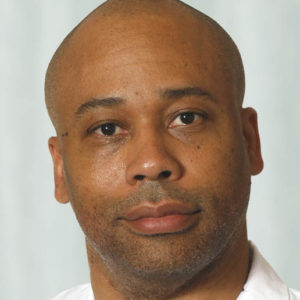
I discovered Dr. Quinn Capers, IV on Twitter one day by chance and started following him when he was tweeting about medical education at “The Ohio State University”. The ‘hashtag’ he used in most of his tweets ‘#BlackMenInMedicine’ further piqued my curiosity. After seeing more tweets and pictures of himself and his medical students, I reached out to Dr. Capers, the Dean of Admissions of the Ohio University’s Medical School, and he agreed to do the following interview. In our interview which coincided with Black History Month, Dr. Capers discussed his own educational path, the ‘hashtag’ #BlackMenInMedicine, and the current landscape of medical education for prospective students.
Anwar Dunbar: Thank you for the opportunity to interview you Dr. Capers. I stumbled across one of your tweets one day which included the hashtag you often use; ‘#BlackMenInMedicine’. It caught my eye, in addition to the pipeline of black male doctors, you’re training there at Ohio State University. Even though you’re at The Ohio State University and I’m a University of Michigan alumnus, I thought interviewing you would be very beneficial to my audience as I’m a STEM practitioner and an advocate myself. Also even though we typically don’t think of medicine as a science, it very much is. With that, can you talk briefly about yourself? Where are you from? What got you interested in medicine?
Quinn Capers: Thank you for the honor of being interviewed Dr. Dunbar. Speaking of Black History Month, your last name reminds me of my high school in Dayton, Ohio. It’s named after our hometown hero; the first black poet who made a living with poetry, Paul Laurence Dunbar. I actually was born in Cleveland, Ohio and moved to Dayton when I was two or three years old which is where I grew up.
My answer to the question, ‘What do you want to be when you grow up?’ was always, ‘a Doctor,’ even as a toddler. I didn’t have any doctors in my family and to be honest, we didn’t see doctors regularly. It was only on an ‘as needed’ basis – i.e. if we were injured or got really sick. I’m not really sure where the thought came from, but I now assume God planted that seed in my heart and mind, as I truly feel I was ‘called’ to this profession.
AD: What is your family’s background?
QC: Though I was born and raised in Ohio, my parents and both sets of grandparents are from Talladega, Alabama. My parents moved to Cleveland, Ohio before I was born, and as stated earlier, we relocated to Dayton before my third birthday. My father is a retired police officer and my mother is a retired postal worker. They divorced when I was very young, and my mother raised my sister and myself. My sister and I were the first in our family to attend college.
AD: Are you the first medical doctor in your family? If not, who inspired you?
QC: Yes I am, but I have a cousin who was studying Pre-Med at the Tuskegee Institute when I was in elementary school. We spent many hours talking about our shared dream of being physicians, and she was always very loving and encouraging. She is now a successful Physician Assistant in New York City.
AD: Describe your educational path.
 QC: I attended public schools in Dayton, Ohio on the city’s west side – the ‘black’ side of town. I was always enamored with Black History and read voraciously about black heroes. Because of this, I knew I wanted to attend a Historically Black College/University (HBCU). I wanted to be taught by professors that were making Black History and I wanted to be in the same buildings, on the same campus, walking the same path as so many of the black intellectuals, artists, and revolutionaries that I had read about.
I chose Howard University in Washington, DC for my undergraduate studies – one of the best decisions I made in my life. For medical school I returned to my home state to attend the Ohio State University College of Medicine. Since I had attended predominantly black schools from K-12 and then Howard, medical school was my first time stepping foot into a Predominantly White Educational Institution (PWI). People have asked me if being at a PWI after having been cradled in majority black institutions my whole life led to my feeling out of place, or ‘inferior’, or if it gave me an ‘impostor syndrome’. No, it was actually just the opposite. Because I had seen so much black excellence, I felt invincible. After medical school, my residency and fellowship training in internal medicine, cardiovascular diseases and interventional cardiology, took place at Emory University in Atlanta, Georgia.
AD: Were there any particular challenges for you on the road to becoming a medical doctor?
QC: There weren’t any big challenges that stand out other than the need to prioritize studying, not over partying, and delaying gratification. Many of my friends were enjoying being finished with school, buying their first car, first house, and essentially living their lives while I was still in school and/or training. But since the opportunity to work towards an MD was a dream come true for me, none of it seemed like an inordinate challenge.
AD: What is your medical specialty?
QC: I am an ‘Interventional Cardiologist’, which is a heart specialist who specializes in opening blocked arteries and repairing heart abnormalities or defects with ‘catheter-based’ approaches. We repair the heart by accessing the circulation through an artery in the arm or leg, and then threading tubes and high-tech catheters, balloons, stents, and lasers to the heart.
AD: If I recall correctly, former Vice-President Dick Cheney had a series of those procedures. How did you ascend to become the Dean of Admissions at the Ohio State University’s Medical School?
 QC: After spending the first eight years of my career in a private cardiology practice, I missed teaching and the academic environment, so I sought a position at my medical school alma mater. In private practice, nearly 100% of a physician’s time is spent taking care of patients. In what we call ‘academic medicine’, doctors work at medical schools and university teaching hospitals and have three responsibilities: caring for patients, teaching medical students and young doctors, and performing research. I thus left private practice to go into academic medicine.
After a short period of time I won several teaching awards from the students. When the Associate Dean of Admissions position opened, a colleague encouraged me to apply for it. My initial response was, ‘No that isn’t a part of my plan,’ which was to impact healthcare and improve people’s lives as the best interventional cardiologist and medical educator I could be. After giving it some thought, I realized that overseeing the admissions process at one of the country’s largest medical schools would allow me to have an even greater impact on healthcare than direct patient care. So, I decided to apply for the position and the rest is history. Now I perform both roles – Interventional Cardiologist and Associate Dean of Admissions, allocating approximately half of my time to each role.
AD: Let’s go back to #BlackMenInMedicine? Where did the hashtag come from?
QC: There are many black male physicians on Twitter. One day in 2017 some of us were having an online discussion about the landmark 2015 Association of American Medical Colleges publication entitled Altering the Course: Black Males in Medicine, which details the current severe shortage of Black males entering the medical profession. According to this publication, there were fewer Black males applying to medical school in 2014 than in the late 1970s and the downward trend continues. This portends a severe lack of Black male physicians in the future.
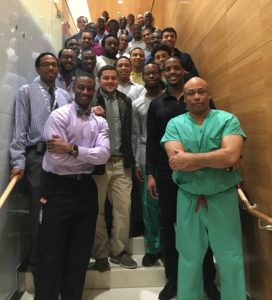
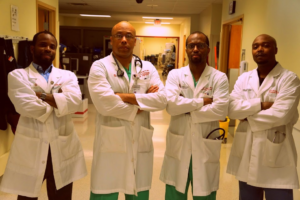
We discussed strategies to combat this trend and collectively came up with the idea of an online campaign to flood social media with images of Black male physicians at work, at play, and simply living their lives. The primary goal is to be role models for and inspire young men (and anyone) to pursue medicine. Other goals include changing the narrative about Black males – i.e. that not all are ‘dangerous’, but that many are physicians saving lives and serving humanity. We also wanted to speak out about injustice in any form against any group. The name of the campaign is thus ‘#BlackMenInMedicine’.
AD: This is an optional question, but based upon today’s climate, have you gotten any pushback because it acknowledges just men and not women?
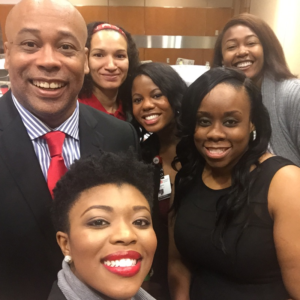 QC: Very little that has been openly stated, but we are sensitive to the fact that there are likely some who feel it’s divisive and not promoting unity. We think that it’s possible to promote Black men in medicine while supporting many other groups. Many of us also tweet using other hashtags that preceded #BlackMenInMedicine, such as #WomenInMedicine, #ILookLikeASurgeon (which promotes images of women in surgery), and others. We took this on because the low numbers of Black men in medicine, in academic medicine, in leadership roles, and amongst medical school applicants has reached a crisis. I should also point out that we, the original creators of this campaign, do not feel that use of the hashtag is proprietary. Anyone who wants to promote diversity in medicine, and particularly encourage Black men to pursue medicine, is welcome to use the hashtag. In fact, we encourage it.
AD: Are there particular programs at The Ohio State University for minority medical students?
QC: Yes. At the Ohio State University College of Medicine we believe that diversity drives excellence in healthcare, and we have several strategies to recruit and support diverse students and women. We’re proud to be leaders in educating women and underrepresented minority physicians. The last four entering classes have been predominantly women, and according to 2017-2018 AAMC statistics, OSU ranks sixth of nearly 150 medical schools for the number of enrolled black medical students. We also have a post baccalaureate program called ‘MEDPATH’ that is focused on increasing the number of underrepresented and/or disadvantaged students entering medical school.
AD: When I was an undergraduate at Johnson C. Smith University in the late-1990s, many of us pondered practicing medicine, but few of us understood what it took to get into medical school – something a particular professor reminded us of regularly. Aside from the necessary academic credentials, what are some of the personal qualities aspiring medical students need to be successful?
QC: Today, most medical schools judge applicants using the Association of American Medical College’s ‘holistic review’ framework, which recommends balancing the applicant’s: experiences, personal attributes, and academic metrics (MCAT and GPA) when making a decision about their candidacy. While the MCAT (Medical College Admissions Test) and GPA are self-explanatory, it’s important that aspiring physicians understand the importance that past experiences and personal attributes will play when your application is being reviewed. You will need to have a track record of compassionate community service, healthcare-related experience (shadowing or volunteering/working in a healthcare setting), leadership, and often research.
Regarding personal attributes, medical schools desire students who are: compassionate, collegial, curious, and who are self-directed learners. While the exact attributes and experiences may vary by school, medical school hopefuls need to ensure that their experience portfolio is full and that their recommenders can speak to the attributes mentioned. Often the difference between the applicant who gets accepted to medical school and the one who doesn’t is not their MCAT score or GPA, but more so a matter of which applicant had the better strategy. Gaining acceptance to medical school is very competitive and applicants should have a well-thought out strategy. Some examples of strategic questions that students should think through include:
• Will I take a “gap year”?
• If I plan to take the MCAT in spring of my junior year, when should I take Physics?
• Which leisure-time activity will demonstrate the attributes that medical schools seek?
• Should I apply before my MCAT scores return?
• If my undergraduate grades are low, should I plan on graduate school? If so, what discipline? MPH or Masters Degree in a biomedical science?
I consider it part of my mission to provide the answers to these questions to students as early in the pipeline as possible. We do this via our OSU College of Medicine website (https://medicine.osu.edu/admissions/md/tips-and-advice/pages/index.aspx), by speaking to students via webinars (https://www.youtube.com/watch?v=Q_7B3qUjuJs), and via social media.
AD: Describe the landscape today in terms of getting into medical school versus when you were aspiring to study medicine yourself.
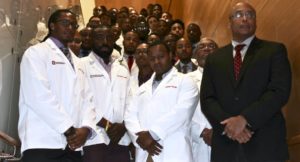 QC: I applied to medical school in 1986. At that time, the weight of academic metrics was definitely more than 1/3 of a candidate’s application. Community service was almost ‘optional’ at that time. Academic achievement is still very important, and always will be when evaluating medical school applicants. However, it is very unlikely that a student will be accepted to medical school today without a record of compassionate community service and healthcare-related experience. Also, many medical school curricula employ both group-based learning and independent learning, so schools look for evidence of collegiality and self-directed learning to provide evidence that a student will be successful.
AD: Okay, Dr. Capers, that’s all I’ve got. Thank you again for this opportunity to interview you, and also for providing the pictures to go along with this interview. I understand that your time is very valuable. Perhaps we can do follow up interviews at some point. Do you have any other parting comments or thoughts?
QC: No. Thank you again for giving me this opportunity, Dr. Dunbar. I’d be delighted to do this again, or even to make it a recurring feature. Good luck to all of your readers!
Thank you for taking the time to read this interview. If you enjoyed it, check out my 2019 interview with Dr. Capers. If you’ve found value here and think it would benefit others, please share it and or leave a comment. Please visit my YouTube channel entitled, Big Discussions76. To receive all of the most up to date content from the Big Words Blog Site, subscribe using the subscription box in the right hand column in this post and throughout the site. Lastly follow me on the Big Words Blog Site Facebook page, on Twitter at @BWArePowerful, and on Instagram at @anwaryusef76. While my main areas of focus are Education, STEM and Financial Literacy, there are other blogs/sites I endorse which can be found on that particular page of my site.

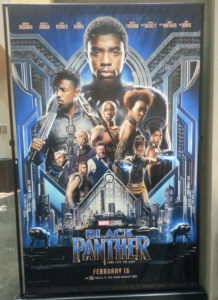 I’ve written numerous movie reviews on my blog. In the current review, I’m once again teaming up with my brother Amahl to discuss Marvel’s Black Panther. According to Yahoo, the film has already made an estimated $192 million over three days, putting it on track to surpass its $200 million production cost, and smash other box office records. Black Panther is the Marvel Cinematic Universe’s (MCU) latest offering leading us up to the Avengers: Infinity War Part One over the summer which will bring most of its characters back to the big screen, and will heavily involve the Black Panther himself and his home of Wakanda as seen in the theatrical trailer. In Marvel’s Black Panther, Chadwick Boseman returns to play the now King T’Challa/Black Panther along with an all-star cast including: Michael B. Jordan, Angela Bassett, Forrest Whitaker, Lupita Nyong’o, Letitia Wright, and many others. The following are our thoughts on the movie.
 Anwar Dunbar: First I would like to acknowledge the Donna M. Saunders Foundation for Breast Cancer Education and Support for hosting a private screening of Black Panther at the AMC Hoffman 22 in Alexandria, Va. It was an amazing event. The foundation does a lot of great work in terms of helping breast cancer patients and their families. The foundation gave attendees numerous collectibles and surprises before the movie started including: Black Panther posters, comic books, and work books. Prior to the start of the movie the foundation also gave us an additional surprise – an introduction by author Jesse J. Holland who authored Who Is The Black Panther?, a novel about the Black Panther’s history. Mr. Holland signed copies of his book after the viewing of the movie.
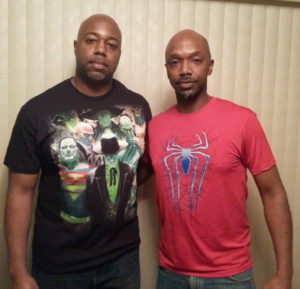 Our Twitter handles are @amahldunbar and @BWArePowerful. If you liked this review, please do click the “like” button, leave comments, and share it. Please visit my YouTube channel entitled, Big Discussions76. To receive all of the most up to date content from the Big Words Blog Site, subscribe using the subscription box in the right- hand column in this post and throughout the site, or add the link to my RSS feed to your feedreader. Lastly follow me on the Big Words Blog Site Facebook page, and on Instagram at @anwaryusef76. While my main areas of focus are Education, STEM and Financial Literacy, there are other blogs/sites I endorse which can be found on that particular page of my site.
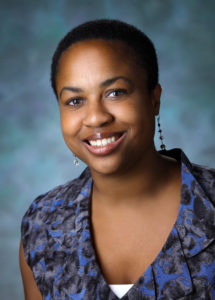 While black history should be celebrated throughout the year and not just in February, the month provides the opportunity to not only recognize African Americans who have made significant contributions in the past, but also those who are presently making history. As there are numerous African American scientists and innovators who are typically celebrated during black history month in Science, Technology, Engineering and Mathematics (STEM), there are also quite few African American scientists in modern times that are worth recognizing. One such scientist is Dr. Namandje Bumpus (pronounced Na-Mon-Jay), of
  Michigan had a summer program called the
  NB: My postdoc was really different. The experimental tools that I learned during my dissertation didn’t really help with what I wanted to do in my postdoc. I wanted to learn something new. Obviously the thinking and knowing how to design experiments was translatable. In graduate school I was doing a lot of
  Often times there are summer camps. At





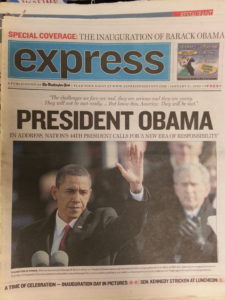 The following piece was originally published on the Examiner back in October of 2013 during my very first government shutdown as a federal employee. It was followed by another piece which I also recently republished titled
 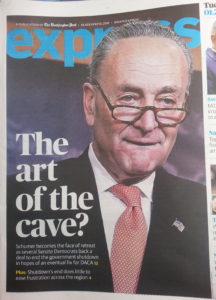 The following piece was originally published on the Examiner back in October of 2013 during my very first
  Two of the
 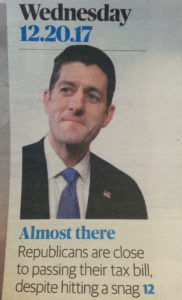 While this is an opportunity for some to boast to the opposition that they had the bill all wrong, my focus is on who will benefit from
  This low percentage of participation in STEM, in addition to
  Two of the
  They were also discussing “
 To understand how
  My first example involved banking but
  Understanding technologies like
  First of all, I hope the opening quote didn’t offend you. It was a part of an actual discussion with my father – one of many, and you’ll see its relevance later on. The first
  Actually, many discussions with my father, who is from Harlem, were also peppered with broad brush discussions of “white people”, “them”, or “they” in unflattering ways – usually about the oppression of black people, and white people having unfair competitive advantages in life. The opening quote of this post was from a discussion he and I had about spending habits and race. Are my parents, grandparents, aunts, and uncles racists? No, I don’t think they think black people are superior to other races, but they did experience segregation and
 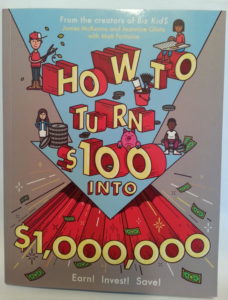 “The person who wrote this, are they white?” my godson asked me.
 I first thought about Asian-American wealth last year when someone on Twitter shared an infographic stating that Asian-American wealth has steadily grown, while their voter participation had stagnated. The point of the tweet was that while Black-America has been one of the more vocal groups during elections, and in civil rights/social justice arenas, we haven’t significantly closed the wealth gap with White-America (as a group). The implication of the tweet was that black people as a group were focusing on the wrong things.
 A subsequent figure titled “
 In the section titled, “
 In closing,
  One of the focuses of my blog is education, and one of my key principles is “Creating Ecosystems of Success”. As such, when appropriate I will partner with other groups and organizations with similar interests. One such organization is the non-profit Rocketship Education. The following is a brief overview of Rocketship Education provided by the organization itself, their school system and their model. The picture in this post was provided courtesy of Rocketship Education.


