

My blog focuses on Financial Literacy/Money and Business/Entrepreneurship. In today’s world where all Western countries are connected, the operating of supply chains is critical. The following contributed post is entitled, The Science Behind the Global Supply Chain.
* * *
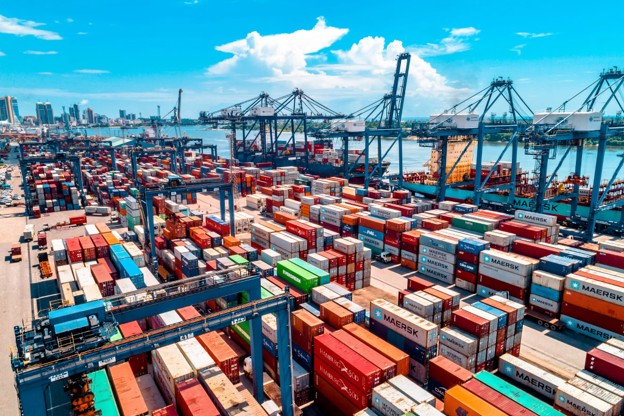
Image Credit: Unsplash
The journey a product takes from a simple idea to the item you hold in your hand is a modern marvel of coordination and technology. Every object, from your morning coffee mug to the smartphone in your pocket, comes from a complex global network called a supply chain. This intricate web of suppliers, manufacturers, and distributors works together to turn raw materials into finished goods delivered to customers. Looking at the science behind this process shows us a fascinating world of innovation, strategy, and logistics that powers our global economy.
Material Science and Product Design
Every great product starts with two key things: what it’s made of and how it’s designed. Material science kicks off the supply chain, as this is where decisions are made. Should it be sustainable bamboo or durable steel? Lightweight plastics or recycled composites? These choices don’t just affect the product’s final look, feel, and function; they also impact its cost, how hard it is to make, and its environmental footprint. Product design then takes these material choices and turns them into a practical plan for manufacturing. Engineers and designers use advanced software to model and test products virtually. This ensures they’re appealing to customers and efficient to produce, all before a single physical prototype is ever built.
Optimizing Global Sourcing Strategies
Once a product is designed, the next crucial step is sourcing raw materials and finding manufacturing partners. In today’s global market, this often means looking beyond local borders to get the right mix of cost, quality, and expertise. Companies have to weigh the benefits of lower labor costs in one region against the shipping expenses and tariffs from another. This complex decision-making process is where many businesses look for specialized help. Choosing a sourcing agent can be particularly valuable when entering an unfamiliar manufacturing market, as the right agent can provide on-the-ground knowledge of local factories, assist with negotiations, coordinate quality checks, and help businesses navigate the practical challenges of working with overseas suppliers. This can reduce the risks and uncertainty involved in international trade.
Manufacturing Processes and Innovation
With materials sourced and partners chosen, manufacturing begins. Technology has completely changed this stage. Robotics and automation now enhance traditional assembly lines, boosting speed and precision while cutting down on errors. Innovations like 3D printing (additive manufacturing) allow for quick prototyping and the creation of complex parts that were once impossible to make. On top of that, lean manufacturing principles focus on getting rid of all kinds of waste, from too much inventory to unnecessary movement. This makes the whole production process more efficient and cost-effective. These modern techniques let companies produce high-quality goods at the scale and speed needed to meet global demand.
Logistics and Distribution Networks
A product isn’t truly finished until it reaches the customer. This is where logistics and distribution come in, a highly complex field focused on moving goods efficiently. This global ballet involves a huge network of ships, planes, trains, and trucks. The journey might start with a container ship crossing an ocean, then a train ride across a continent, and finally a delivery truck navigating city streets for the “last mile” to your door. Modern logistics relies heavily on data analytics to optimize routes, manage warehouse inventory, and predict demand. Effective supply chain logistics management ensures products are available when and where customers want them, preventing stockouts and cutting down delivery times.
Blockchain for Supply Chain Transparency
Trust and transparency are among the biggest challenges in a global supply chain. How can a company be sure its products are real, or that its suppliers are following ethical standards? Blockchain technology is becoming a powerful answer. A blockchain is essentially a shared, unchangeable digital ledger that records transactions. In a supply chain, this can track a product’s journey from its raw materials to the final sale. Each step is recorded as a “block” of data that can’t be changed, creating a permanent record. This lets companies and customers check the origin and authenticity of goods, fight counterfeiting, and ensure compliance with sustainability and labor standards, building a new level of trust into the system. Many experts are exploring how blockchain technology improves supply chain transparency across various industries.
As technology keeps evolving, supply chains will become even smarter, more resilient, and more transparent. The intricate science behind moving a product from idea to customer is constantly being refined, making sure the flow of goods that defines our modern world continues without interruption.
