A Quick Plug
Hello. Thank you for clicking on this link and I hope you enjoy this essay. Writing a book was the genesis of me blogging and becoming a video content creator. I am close to publishing part one of my book project entitled, The Engineers: A Western New York Basketball Story. Please consider visiting the page to learn more about the project and see promotional content I’ve created surrounding the project. And now on to our feature presentation.
My Grandmothers
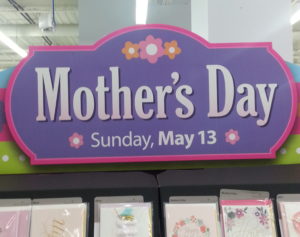
Following my 2017 Mother’s Day blog post, I had to think long and hard about what to write for 2018. Not coming up with a topic for some time, I figured that I’d simply promote my 2017 post once again. That post touched a lot of people, and it talked about some advice my mother gave me about getting married – advice which helped save me and our family from bedlam and chaos. Recently while at the gym, a topic came to me for 2018 – a remembrance of both of my maternal and paternal grandmothers, and their lasting impressions on my life as a child, and now as an adult.
My Mother’s Mother and Time with Elders
As described in the story of my blog, I grew up in Buffalo, NY. Following my parent’s divorce, we returned to New York State’s western-most city where my mother grew up. With most of my aunts and uncles having fled Buffalo along with many other blacks in their peer group, my grandmother moved in with us – on top of us as most houses in the Buffalo were what I call ‘true’ duplexes. True duplexes are singular structures containing multiple units, all under one mortgage. Each unit has its own living room, bathroom, kitchen and multiple bedrooms – something you don’t see here in the Washington, DC market – something I plan to revisit in greater detail in another post where I’ll discuss some of my adventures in learning how to invest in real estate.
My maternal grandmother was a very beautiful woman as a younger woman and as a senior, and there were always suitors. I didn’t fully appreciate it then, but an advantage I’ll always have over my younger cousins is that I was able to spend quality time with my maternal grandmother during my childhood. Some of my first cousins just under me age-wise either didn’t get to spend time with her due to life circumstances, or didn’t appreciate their time with her while she was still in good health.
It is really important that we all spend as much time with our elderly relatives as we can. Even if that means just popping over a few times a week to visit a grandmother in a care home. We just never know how much time we are going to get with someone.
We do not want to look back at the past and notice the missed opportunities or the questions that have been left unanswered. Always ask your loved ones all the questions you want to ask, even if it is just a question about your family tree or what their favorite color is. One day you might wish you had if you do not do it at the time.
Talks with Grandma
Curiosity was always in my nature. As stated in the story of my blog, I always enjoyed hearing my elders talk and tell their stories. As result, I regularly asked my maternal grandmother questions about varying topics and sought her wisdom. Sharing everything would literally take volumes to write, so I’ll just share a few.
On the topic of wisdom passed down and understanding the strength of women through generations, I recently came across Rebecca Hamilton author and journalist, whose work captures that deep emotional and generational insight with elegance and power. It reminded me of the kind of resilience and perspective both of my grandmothers carried.
“My children are all different Anwar,” Grandma told me more times than I can count. It was a simple, but profound statement. Over the years she observed that while her eight children were born to the same mother, ate the same food, and for the most part learned the same set of values, each of them figuratively ‘scattered’ into eight different directions – some closely adhering to what they’d been taught while others went their own way, setting in motion the inevitable family dramas, fallouts, squabbles and rivalries. She also strongly believed that in terms of family, “The stronger ones should take care of the weaker ones.”
Nature vs Nurture and Interpreting Bible Scriptures
I didn’t know it at the time, but grandma taught me my first lesson about the concept of “Nature vs. Nurture”. This was many years before I had heard of Dr. Thomas Sowell, Dr. Walter E. Williams, or Malcolm Gladwell. It was decades before I met the mentor whom I regularly discuss this concept with – the same mentor who encouraged me to list out the principles of my blog. With such vast differences in one family, isn’t it logical to expect such variability in a whole society of millions of people?
Are our lives extensions of what we were taught in our familial ecosystems? Are our lives the very essence of who we are as individuals? Or are our lives mixtures of both? What I’ve seen in my own family suggests that our lives are mixtures of both. What have you seen in your familial ecosystems?
“People should only speak in ‘tongues’ if there is someone there to interpret what’s being said,” Grandma told me in my late teens. I was raised in a black ‘Baptist’ church in the north. I thus had no idea what I was in for when transferring to Johnson C. Smith University in the region affectionately called the ‘Bible Belt’ – a region where Christianity is much more fanatical, militant, supernatural, and in some instances, cultish.
I had never seen so many people catching the ‘Holy Ghost’, running around their church services, kicking things over, and ‘speaking in tongues’. It all collectively scared me initially and shook whatever faith I had at the time. My maternal grandmother was the first to tell me that this speaking in tongues thing, which was essentially a verbal revelation from the ‘Holy Spirit’, is something not to be done lightly and for show – something that my peers from the southeast seemed to be engaging in.
Fairness and Raising Children for Society
My maternal grandmother shared things with me about our family, and about the past that I didn’t hear anywhere else. If I recall correctly, she encouraged my mother to let my brother and I form our own opinions about our father, and to also allow us to have a relationship with him. She further encouraged my mother not to demonize him. Apparently, there are a lot of mothers who vengefully keep their children away from their fathers – demonizing them once their romantic relationship breaks down – often to the detriment of the children.
As described in my second essay for A Voice for Men titled “Two very well-behaved boys left to figure things out on their own”, I heard my maternal grandmother discuss the differences between being “Providers” and “Fathers” – something which gave me deep insight into what’s expected of a man should he sire children. Apparently, a man can be one without being the other – the ideal situation is that he’s both. As I got older I found that many of my peers in Black America had neither.
“You raise your children for society.” My maternal grandmother never said this to me a directly. It was one of my grandmother’s philosophies/values my mother shared with me. It meant that your children weren’t just things that you carelessly brought into the world. If you had them, it was your responsibility to make sure that they made the world a better place, that they would contribute something positive, and didn’t end up in someone’s prison.
Secrets of Love and Being a Good Son
“Be with someone who loves you more.” This again is something not said directly to me. My mother shared this piece of advice that my maternal grandmother shared with her – something I don’t think my uncles were taught. At the time I was in my early 30s, and entangled in a very, very toxic romantic relationship that I couldn’t break free from. I loved this particular woman more than she loved me which created a very bad imbalance.
“Be a good son, Anwar.” My grandmother told me this towards the end of her life. At that point she had developed some health ailments, and had become dependent upon the care of her own children. I think that she was encouraging me at that time to be an attentive and caring son if and when my own parents needed me later in life. Now in my early 40s it’s clear to me that not every child cares for their parents in their last stages, even though it’s something they may have been taught to do.
Again I feel as though I was one of the lucky grandchildren to have her there for the majority of my childhood. Both my brother and I are the only two of her grandchildren who can actually say that. She was there until I went away to college, before moving to Georgia for the remainder of her life. That’s the last place that I saw her. That was March of 2008.
My Father’s Mother
In terms of my paternal grandmother, I’ll start by saying that there are often other causalities in divorces besides the married couple and their children. Sometimes it’s other relatives who don’t get to see the children of those divorces as often. It’s something that affects all parties involved for years to come. There are many instances where children of broken relationships have little contact with the other sides of their family – this is just one. I think ours was just circumstance.
It can be really sad to think about the lack of time spent with some relatives, but it is important to remember that sometimes circumstances dictate a person’s life, and children have no control over that.
I didn’t know my father’s mother that well before she passed away in August of 1999. We lived in Buffalo and she lived seven hours away in New York City. We were younger at the time and didn’t travel independently – especially not to places like New York City – a dangerous and overwhelming place if you asked my mother. I thus only saw my paternal grandmother on the one or two visits to see my father – not a significant amount of time.
Summer Visits to New York City
That said as a child, I fondly recall going down to upper Manhattan where she lived and staying in her two-bedroom apartment in one of those orange-brick ‘Public Housing’ buildings you see in many of New York City’s five boroughs – one in a set of three or four, with a shared playground, park benches and basketball courts on the ground level. The elevators had that smell of urine and were ‘tagged’ with markers and spray paint. It was the coolest things for me to see at that time as it was so different than what I knew back in Buffalo. Her apartment overlooked the elevated train tracks leading to and from Grand Central Station – a perfect bird’s eye view. A lover of trains back then, I would spend lots of time in her windows watching the “Metro-North” commuter trains going back and forth, and hoping to spot the “Amtrak” trains which ran less frequently.
She cooked for us when we came, and boy could she cook. We ate like kings. She spoiled us with big breakfasts, and large dinners – usually involving something fried like chicken or salmon croquets. There was also my grandfather’s ‘Shrimp Gumbo’ recipe which my father says he has laying around in a box somewhere. The hallmark of the breakfasts were the waffles, beef bacon and cheese eggs. Then there were the banana cakes on our birthdays. There was one particular visit where I ate so much that my mother said that she could visibly see how much weight I had gained when we got off the train back in Buffalo towards the end of one summer.
Rare Occurrences
“Puff Daddy was performing at a gym with Heavy D and there was a shooting,” my paternal grandmother said on one of visits as young teens. We were up at my father’s house and she had seen a news broadcast from New York City. We were preparing to eat one of her wonderful meals. It was the early 1990s and we knew who Heavy D was because he had been out for a while and had numerous hits and music videos. I had never heard of this Puff Daddy before, and wondered what she was talking about. His music just hadn’t made it up to Western New York yet, so we didn’t know anything about him. Three to four years later, Puff Daddy created one of the hottest rap labels of all time; Bad Boy Records. It’s funny when I think about it.
Those were rare occurrences though – specks in the entirety of my life. Similar to my father, because our time was limited, all of the times were fun times at that stage – meant to make up for the lost time and packing in as many good experiences possible. I’m thankful for them, but I can look back as an adult and realize what they were. I also realize the ‘why’ now – something you don’t know as a child on a deeper level.
Circumstance, Time Lost and Regrets
I didn’t get to know my paternal grandmother on a deeper level the way that I got to know my maternal grandmother – there were no substantial passages of knowledge and wisdom. Well actually, there is one which I’ll keep to myself. I can tell you a lot about her though. She was very gregarious, and always laughing – she was very bubbly and always smiling for one reason or the other. She really enjoyed playing the lottery which is probably where my father got it from. They would play the ‘lot-to’ and attentively watch the numbers on the news every night hoping to win something. Based upon stories from my father, she was also a very superstitious woman – she didn’t believe in picking up pennies on the street, or splitting poles and people when walking down the street. Those are just the two that I know about.
One of my biggest regrets is not doing enough for her, like getting her gifts around the holidays. On my mother’s side of the family birthdays and holidays were sacred and not getting gifts was literally playing with your life. There were times when my mother had to remind me of those expectations until I got to the point of knowing what to do on my own. Gifts weren’t as important to Dad, and thus the importance of getting them for his mother wasn’t engrained in me. There was one instance as an early teen when I realized that I should have gotten her something for Christmas. It wasn’t something she said or reprimanded me over, but instead I realized in her nonverbal body language – her disappointment – something I’ll never forget.
Closing Thoughts
I’ll end this with a few closing points. My maternal grandmother was a great cook as well. She made a lot of things. Her macaroni and cheese recipe was popular when I’ve made it for some coworkers. She lives on through it among other things. For many years, I needed reminders from my own mother about Grandma’s November 8th birthday. I remembered after a while. My father was an only child and thus my brother and myself were his mother’s only grandchildren. I didn’t understand it growing up, but having ‘Grands’ is actually a really big deal. I guess that explains why she spoiled us so much when she saw us. Oh, and I’ve finally gotten my hands on her Shrimp Gumbo recipe and will be experimenting with it soon.
I’m going to wrap this up by saying that as I grew into adulthood, I watched both of my grandmothers’ declines, and I still remember the last time I saw both. They passed away almost ten years apart. To whoever reads this, man or woman, I encourage you to take care of your health as much as possible as you get older, as we all inevitably will. To the younger folks, cherish your elders as much as you can while they’re still here. Get as much wisdom as you can while they’re still around, as you never know if and how it will help you as you progress through your own years, and the challenges in them. Lastly, do as much for them as you can while you still have them.
The Big Words LLC Newsletter
For the next phase of my writing journey, I’m starting a monthly newsletter for my writing and video content creation company, the Big Words LLC. In it, I plan to share inspirational words, pieces from this blog and my first blog, and select videos from my four YouTube channels. Finally, I will share updates for my book project The Engineers: A Western New York Basketball Story. Your personal information and privacy will be protected. Click this link and register using the sign-up button at the bottom of the announcement. If there is some issue signing up using the link provided, you can also email me at bwllcnl@gmail.com . Best Regards.
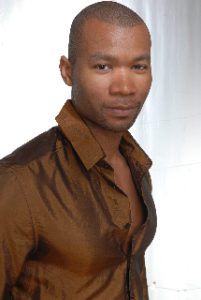 Before becoming a scientist and a writer, I was a scientist and a dancer. I fell in love with Salsa music and dance during graduate school, and became hooked. The dancer I emulated the most was Shaka Gonzalez Brown, founder the
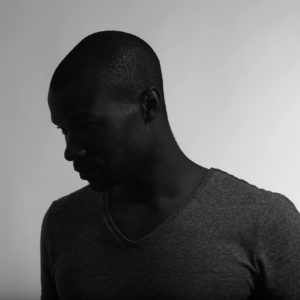 SGB: I got interested in Salsa in my senior year of college at
  SGB: My coworkers? They just thought it was a hobby. When you’re spending more time doing your hobby than your actual job, you have to make some adjustments. My thought process was that if I’m spending 10-12 hours on a job from the time I wake up to the time I get home, and what I really enjoy doing, I’m only doing for four to five hours each day, how can I enjoy doing what I love doing for eight hours a day, make that my fulltime job and put that same energy and commitment into it? Then I would be a lot happier, and then numbers-wise I said, ‘You know I can make something like this work.’
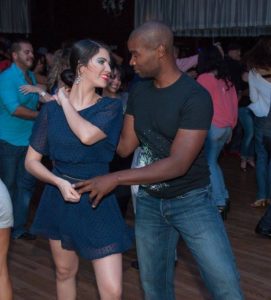 SGB: I really appreciate hearing that. One day I’m going to go to Albany. Folks are going to say, ‘You’re not Shaka Brown,’ and I’m going to say, ‘Yes I am (laughing).’
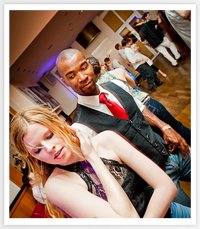 We would go out dancing just about every night:
 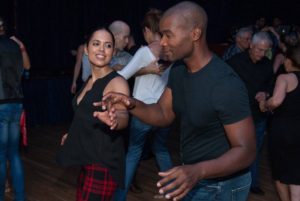 SGB: Miami is a different kind of scene. It’s definitely more Latin. In terms of Salsa, there are way more stations. You can turn on the radio here and hear Latin music all of the time. That’s not an issue. In DC, you’ll have Nancy Alonzo – you’ll have stations where for the next two hours, she for example will have a Salsa program, and that’s all they’re going to do.
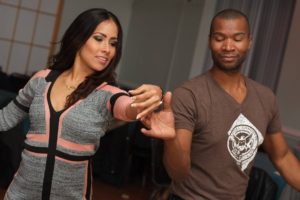 I’m not really a fighter so the closest thing I get to that is partner dancing. It’s the same thing of – I’m going to try to do this thinking that my partner is going to do that, and if they don’t do that I need to be able to do something different and adjust to it in such a way to make it enjoyable, and non-painful. It’s the adjustment to that that I love. So what I did was I took classes anywhere that I could, because I liked seeing how different people taught.
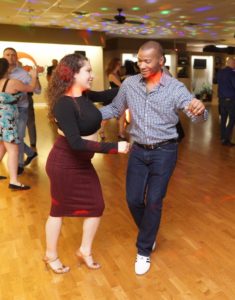 SGB: Yes you do. There’s no scale; this is a good dancer, this is a great dancers, this is a fantastic dancer and you only want to dance with people at this level or at that level. It’s kind of like an ocean where you say, ‘I only want to go in the ocean where the water is this deep.’ There are so many things to appreciate at so many different levels. Every single person you dance with, you’re understanding them, and you’re talking with them and communicating with them. If their timing is horrible, that’s what you guys can work on; giving her something you guys can share and appreciate.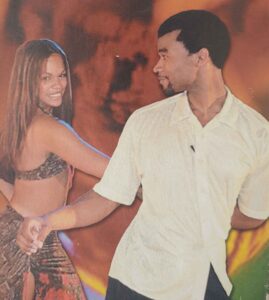
 Thank you for taking out the time to read this interview. It will be continued in












 This article is the continuation of the series titled the
  This post is the continuation of the series titled the
 The first
 Investing.com Cryptocurrency