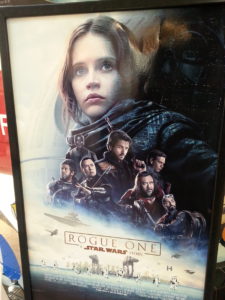
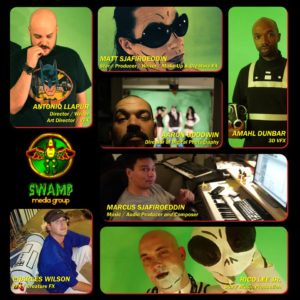
 My brother Amahl Dunbar of the Swamp Media Group (producers of The Space Detective), and I recently wrote our first movie review for Marvel’s Dr. Strange. As promised at the end of that piece, we’re back to review the latest installment of the Star Wars franchise; Rogue One: A Star Wars Story directed by Gareth Edwards. The following is our discussion and analysis of Rogue One. Please be advised that if you haven’t seen the movie yet, this may spoil it for you.
Anwar: First off bro welcome back for our second review, this time of Rogue One: A Star Wars Story. We were children when Episodes IV-VI were produced and thus go way back with the Star Wars franchise. I’m going to further date us and say that in addition to seeing the original movies, we also played with some of the original toys made by Kenner – the action figures, ships, and vehicles. That was a great time to be a child. We were also young enough and of sound mind when the prequels were produced – Episodes I-III, and recently the continuation of the series with Episode VII: The Force Awakens. Rogue One: A Star Wars Story is interesting conceptually in that it isn’t officially one of the “Episodes”, but instead is in itself a prequel which chronologically takes place between Episodes III and IV. Do you have any opening comments or thoughts?
Amahl: Yes. The tone of Rogue One was set early in the film when the Mother of the key character was killed off as you’ll describe. That let the audience know that this was going to be a serious story in the Star Wars universe.
Anwar: Okay so in terms of what Rogue One: A Star Wars Story is about, it takes place after Episode III: The Revenge of the Sith, where we got a glimpse of the early stages of the Death Star being constructed. By the way in terms of storytelling, at least in the movies, the Star Wars films never really mark time, like Star Trek does. We only know that the story is taking place, “Long ago in a galaxy far, far away,” the hallmark intro of the films which was omitted from this one in addition to the crawling introductory passage.
Going back to the story, at the end of Episode III, we got glimpses of Emperor Palpatine, Darth Vader and Grand Moff Tarkin looking on as the Death Star was being built. Rogue One starts with Imperial Director Orson Krennic (Ben Mendhelsohn) traveling to the planet Lah’Mu to re-enlist the help of engineer Galen Erso (Mads Mikkelsen) to help finish construction of the Death Star. Erso who hoped to disappear into a life of agriculture and his wife Lyra (Valene Kane) who is murdered during the confrontation, have a daughter named Jyn who escapes, and is found by their ally Saw Gerrera (Forest Whitaker).
Fifteen years later, Jyn (Felicity Jones) grows up and is a prisoner of the Empire. She is rescued by Cassian Andor (Diego Luna) of the Rebellion and his reprogrammed Imperial Droid K-2SO (Alan Tudyk) and is asked to help find Saw Gerrera who himself is sought out by an Imperial pilot named Bohdi Rook (Riz Ahmed). Rook was actually sent by Galen Erso to reveal that the Death Star was built with a built in vulnerability. Under orders from the Rebellion, Jyn and Cassian travel to the once Jedi- home world of Jedda where the Empire is extracting Kybar Crystals which were used to power the Jedi’s lightsabers but are now also going to be used as the power source for the new Death Star. There on Jedda, Jyn finds Saw Gerrera, and learns her father’s secret about the Death Star setting the stage for the remainder of the story which involves some familiar faces and some hallmarks of the Star Wars franchise.
So that’s the basic premise of the film without completely giving away the second half of it which I’m sure Lucas Film will appreciate. Darth Vader does appear, and in terms of the significance of the name “Rogue One”, you’ll have to see the movie, but it is cleverly woven into the script and story.
Okay bro. With all of that being said, do you have any thoughts on the movie? What stood out to you about? The story? The dialogue? The imagery? The visual effects? One of the things that stood out to me was the diversity of the cast ethnically, and in terms of the protagonist being female in addition to many of the Rebel leaders and even pilots and soldiers.
Amahl: What stood out to me was how much Rogue One reminded me of playing the Star Wars video games whether they be of the action or adventure genre – avid gamers understand the difference between the two. Whenever the main characters (and the audience) went to a different planet for example, there was either a person of interest to contact, or a location to be sabotaged, robbed or disabled. Also, the martial arts action star, Donny Yen (IP Man trilogy), plays a blind Jedi with no light saber. If anyone in a Star Wars movie should’ve wielded a light saber, it should’ve been Donny. That’s like putting Bruce Lee or Jackie Chan, in a Star Wars movie without a light saber.
Anwar: Interesting. In terms of your reference to video games, Rogue One did remind me of Star Wars: Knights of the Old Republic which completely sucked me into its world back in 2004 when I was in graduate school. Hours would blow by when playing that game. Early in the game, your party escapes from the planet Taris just before Darth Malak’s Leviathan ship destroys it, and in Rogue One, Jyn’s party escapes from Jeddha after the Death Star unleashes its initial deadly blast.
I had to see Rogue One twice to take in all of the minute details and remember all of the names. It was similar to some of the other movies in that it started off with a character from humble beginnings who ends up being the main protagonist. It had more of a dark, gritty, and tough feel about it as Jyn starts off as an adult as a prisoner of the Empire. Cassian is a spy whose main job is gathering intelligence at any cost, and in some instances assassinating targets. In this regard it really felt like what’s happening in our world now. I was surprised that Saw Gerrera didn’t last longer in the story. Speaking of which, I liked how they showed him inhaling that drug through his gas mask showing that the years of opposing the Empire had taken a toll on his soul and spirit causing him to have to self-medicate.
Amahl: Absolutely, Forrest Whitaker’s character Saw Gerrera was very interesting. They could’ve done a flashback scene showing why he needed full prosthetic legs or the abdomen prosthetic. That was a nod to the prosthetics Darth Vader needs to stay alive. In the Star Wars universe, if you need prosthetics the audience is usually shown why the prosthetics are necessary. Also, all prosthetics are not created equal. Darth Vader’s robotic limbs look high end and state of the art. Saw Gerrera’s robot limbs looked like they were bolted on from the Sanford & Son junk yard.
Anwar: That’s a good point. When the scene opened up showing him years later and focusing on his legs, I thought we were about to see something like General Grievous.
Consistent with Episode III, there wasn’t a strong Jedi presence in this movie as most of them were killed off except for Master Yoda and Obi-Wan Kenobi who is alluded to by Bail Organa (Jimmy Smits) during the film. It was also interesting that the movie took us to Mustafar and we got to see how Darth Vader’s organics are sustained. It was kind of eerie to see.
Did you have any favorite characters? I think my favorite characters were K-2SO and Director Krennic.
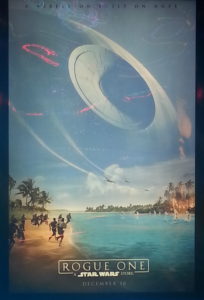 Amahl: The cameos were great for those who caught them. There were many including Bail Organa as you mentioned. I didn’t have any favorite characters, but I also enjoyed the droid character, K-2SO. This droid was wonderfully unpredictable and stole every scene he was in. You never knew what he was going to do or say.
Anwar: What are your thoughts on the visual effects? I was impressed by how they CGI’d Grand Moff Tarkin (Peter Cushing and Guy Henry), Princess Leia (Carrie Fischer and Ingvild Deila), and some of the other characters. In the final battle of Scarif, I think they also CGI’d the Red- and Gold-Leaders who were actually in Episode IV: A New Hope during the Rebel assault on the Death Star. I also thought it was cool that they showed us the two thugs that confront Luke and Obi-Wan Kenobi at the Mos Eisley Space Port in Episode IV as well – Dr. Cornelius Evazan and Ponda Baba.
Amahl: The overall visual effects of this installment were focused on size and scale. The director and production artists showed just how large buildings or massive explosions look at the ground level, or points of view from ships and satellites. The explosions seen from the Death Star’s point of view let the audience know just how destructive and unnecessary weapons of mass destruction truly are.
Anwar: In terms of storytelling, I really like seeing conflicts between villains and enjoyed the rivalry between Krennic and Tarkin. The writers also showed us that Darth Vader never seemed to fully buy into the power of the Death Star – something we are shown in Episode IV where he warns Tarkin and the others that, “The ability to destroy a planet is insignificant next to the power of the force,” just before he uses his force choke again as Admiral Motti who belittles Vader for his belief in his “Ancient religion”. I love that scene. Oh and Vader uses the choke again in this movie.
Amahl: Yes exactly Anwar, from a story telling point of view, characters like Jar Jar Binks would’ve had no place in Rogue One. This story was too serious for the buffoonery of characters created for children.
Anwar: What did you think about the ending? Rogue One leaves off with Princess Leia receiving the plans. I would have preferred to have the ending a little more open ended and left to the imagination such as Jyn and Cassian transmitting the plans and wondering if they were actually received by the Rebellion – something to that effect. That’s just me as a writer.
Amahl: For me the cameo by a digital Leia was too much. It was kind of like eating a dessert that’s too sweet. Instead of showing the face of the digital double, they could’ve used an actual human body double with the white hood draped over her face. Or do an over the shoulder shot (an OTS shot), showing the classic Leia double bun hair style.
Anwar: Agree. Speaking of Carrie Fisher, I’d like to dedicate this review to her and her mother Debbie Reynolds who both passed away recently. Carrie Fisher was an icon. She was most known for her role as Princess Leia in Star Wars and was a fixture in many of our childhoods, but she played in a lot of other notable films as well, and she will be missed.
Okay bro I guess that wraps it up. It’ll be interesting to see if Lucas Film generates any further backstories for us, or if all of the new productions will simply move us forward from Episode VII. We should try to reconvene and review Hidden Figures – not a Super Hero or Sci-Fi film, but instead and historical piece involving the contributions of a group of black women to Astronomy which is an important story. After that it’ll definitely be Spider-Man: Homecoming. Based on the trailer, it looks like it’s going to be great.
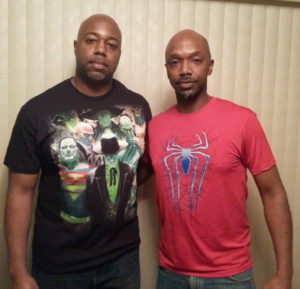 What’s your twitter handle just in case other enthusiasts want to follow and interact with you?
Amahl: It’s @amahldunbar.
Anwar: My Twitter handle is @BWArePowerful .
Thank you for taking the time to read this review. If you enjoyed this review, you might also enjoy:
• A review of Marvel’s Black Panther
• A review of Marvel’s Thor: Ragnarok
• A review of Marvel’s Spider Man: Homecoming
• A review of Marvel’s Dr. Strange
• A review of DC’s Justice League
• A review of Blade Runner 2049
To receive all of the most up to date content from the Big Words Blog Site, subscribe using the subscription box in the right hand column in this post and throughout the site. I can also be followed on the Big Words Blog Site Facebook page, and on Instagram at @anwaryusef76. While my main areas of focus are Education, STEM and Financial Literacy, there are other blogs/sites I endorse which can be found on that particular page of my site.
 Earlier this year I was granted a second interview with
  Earlier this year I was granted a second interview with
 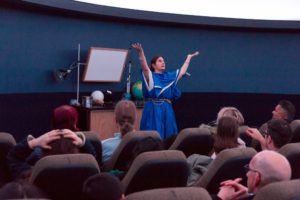 From the Dec. 9-11, the
  This post was originally going to strictly be my reaction to the
 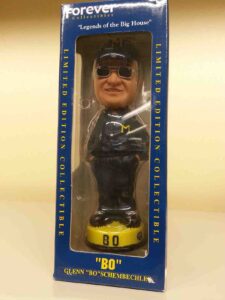 As a scientist, I’m a pragmatist first and foremost and I thus like to deal with the facts and try to minimize emotion which – very difficult to do in something like this. Though I was disappointed with the outcome game, most of my Tweets centered around what our team did that contributed to the loss. The three turnovers involving our quarterback
  Enter the
  Based upon the imbalance and nature of the penalties called, it would’ve made sense that there was a bias inherent in the officiating crew. It was some of those calls which made
  The loss left the
 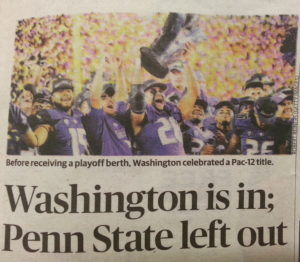 It wasn’t meant to be though. Probably after hearing all of the talk about their weak non-conference schedule, Washington came out and played inspired in the
  That next morning I woke up with no expectations and expecting my Wolverines not to be selected. When the announcement was made starting at noon, the teams were steadily announced on my Twitter feed. Alabama was seeded number one followed by Clemson at number two. Ohio State was seeded at number three while Washington was seeded at number four. The two matchups would thus be
  In the after math of our loss to that team from Ohio, and the seeding of the playoff, I pondered that this is only year two for the
  As described in my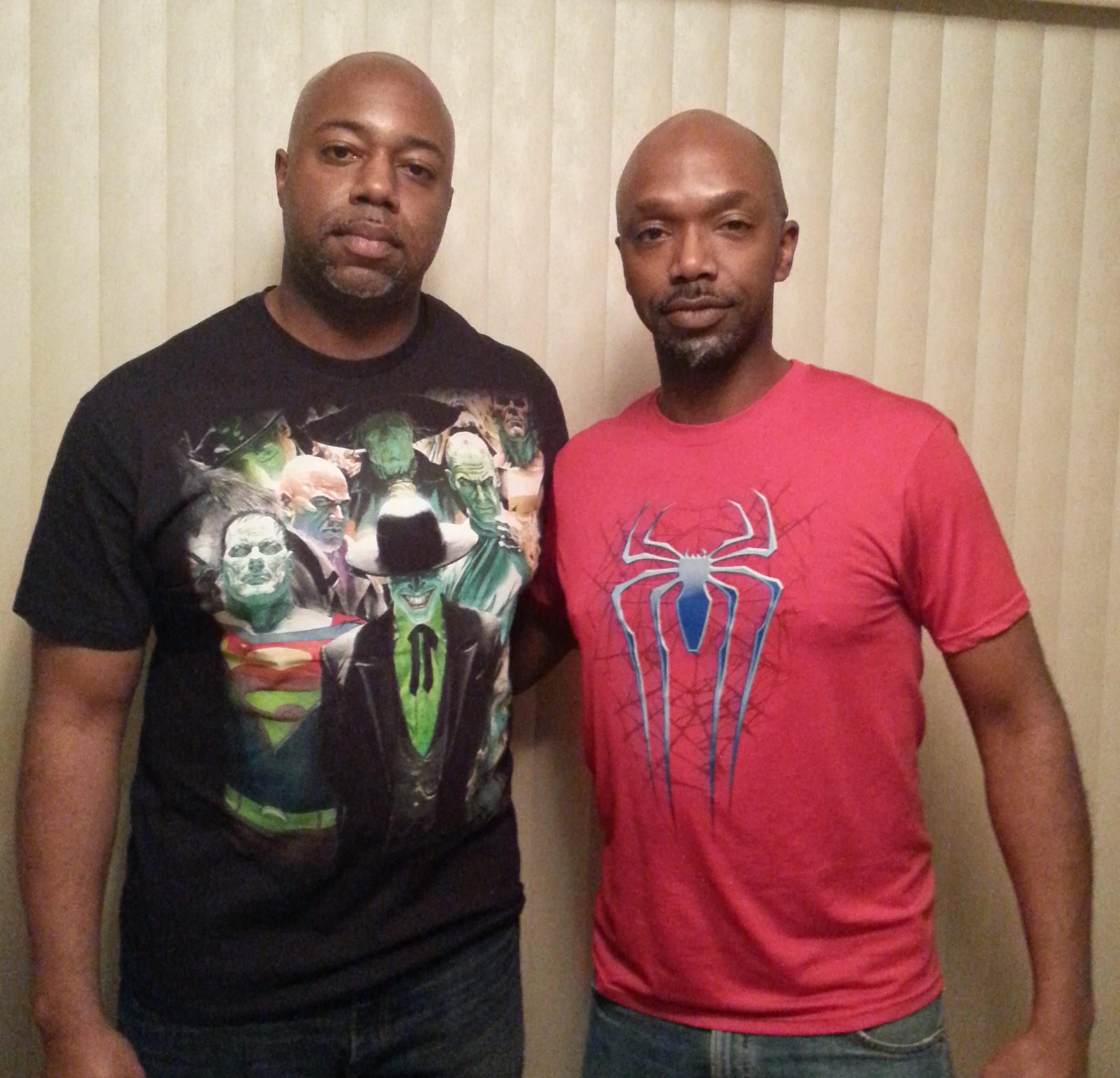

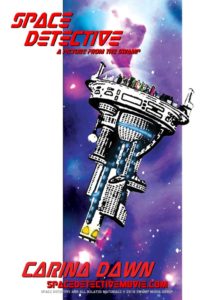
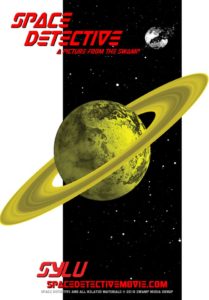 We added this crazy element of it being in the future, essentially in a galactic community. So rather than our story taking place in some hard-boiled American city, it takes place on this space station called ‘Carina Dawn’ which is floating out in the middle of nowhere close to the
 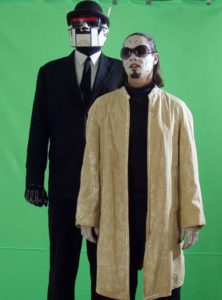 AL: But the basic plot of the movie is that Shiro (the protagonist) gets a phone call from his ex-girlfriend. She says, “Come back to Carina Dawn. I need some help getting away from my gangster husband. He’s not good.” And essentially that’s it. He’s going to help this girl get away from her gangster husband and he gets mixed up in a crazy plot involving space terrorists, mobsters and the fate of the galaxy.
 MS: I’m really big on
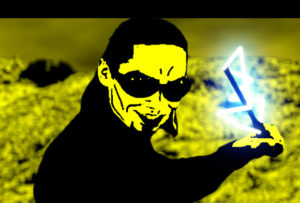
 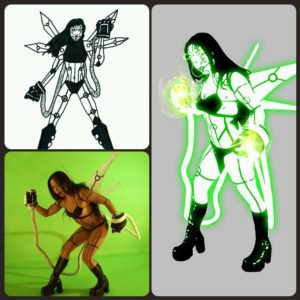 AL: Oh yes, this is all us, man. That’s something that we cooked up. There’s a similar technique they use called roto-scoping where they will trace over actors to creates an animated look. We didn’t do that. We did everything in camera. We put makeup on our actors – almost kabuki style. The style of film is very striking – we shot it in front of a green screen and then we put that in the computer and processed it a little bit. We adjusted the contrast, the black and white levels, but its still actors and we didn’t change it that much. We’re just doing a visual crunch, if you will, on their images. We use a lot of puppets too.
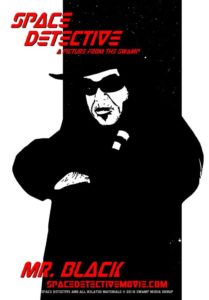
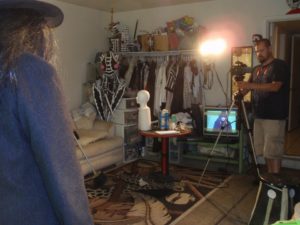 AL: Yes, so to describe the visual aesthetic of the movie, everything in
 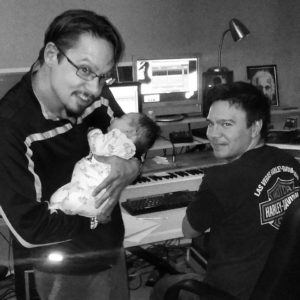 MS: My brother, Marcus, is a classically trained musician. He played in the
 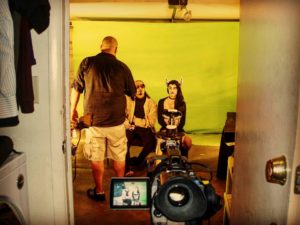 AL: I agree with Matt. We learned that we can do it. I was always scared of directing growing up. I would say, “I can’t come up with all of these shots. I don’t know what I’m doing.” But I actually do know what I’m doing. I’m pretty good at it, and Matt’s pretty good at it. I’ve learned that I think directing is probably the hardest thing that anyone can possibly do. It is the playing soccer of art making. It is all about endurance. It is all about not giving up. It’s about trying to con your friends into doing insane things, and then trusting them. It’s about leadership and a lot of other things.
 AD: Well gentleman, thank you both for this interview. I look forward to seeing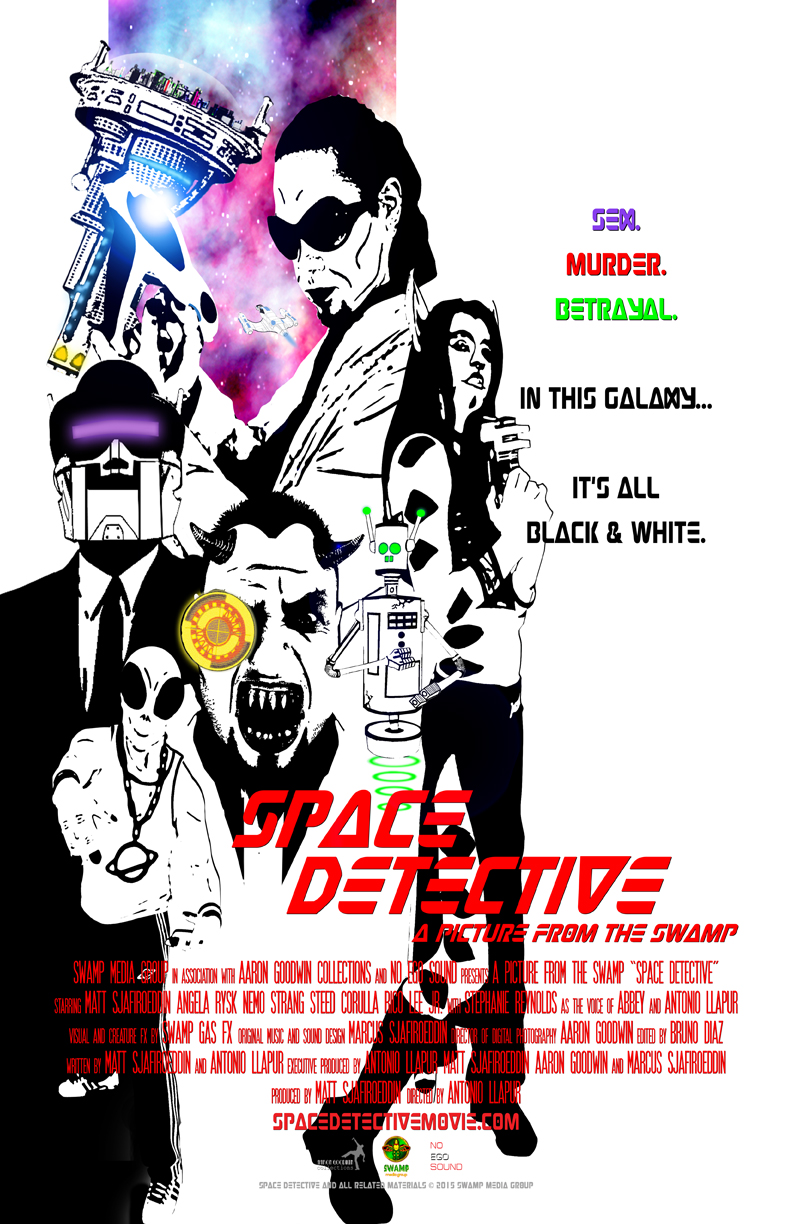
 MS: It’s funny because we’ve been roommates for a while. We live in a house now and we used to live in an apartment. We used to call our place ‘The Swamp’. Do you remember the Television show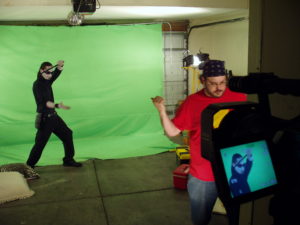
 AL:
AL: 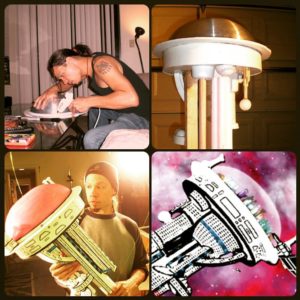 MS: Well, we had just recently finished production of one of our other short films called,
  MS: We’ve joked that this film has been like our graduate school education in that we’ve had to do so much of it ourselves from the writing, to the acting, to the directing, the special effects, the practical effects, the sound, the music – we had to do so much of it ourselves in this tight group of us. It felt like graduate school you know because we learned some of this stuff in college, but until you actually apply it to something, it’s all theory. So making this movie has really helped us hone our skills as film makers and storytellers.
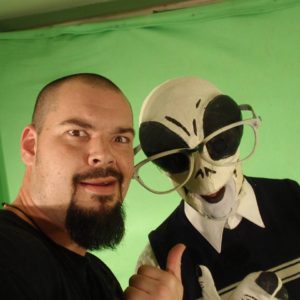 So we just said, “Okay, let’s just keep at it”. We got to point where people said, “Hey, we’d like to invest”, but we had come so far and we’re going to finish it ourselves (laughing). So we own all of it. We paid for all of it and now we have an executive producer to help us with the Post and the Film Festival. He was our cameraman, Aaron Goodwin. He’s on the show
  MS: Yes, we started this so long ago that it was before Crowd Funding and
  MS: It’s funny, because people would always ask us, “What is this about?” And the title tells you.
  From November 18-20,
 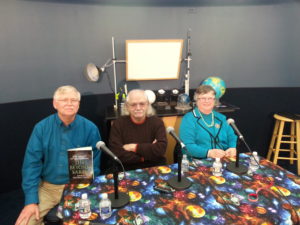 Some of the more well-known names often used in entertainment world’s references to science were also mentioned.
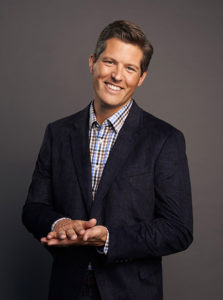 Around 2012, two friends introduced me to Dave Ramsey’s
 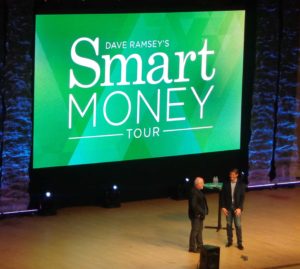 AD: From your testimony at the tour stop, it sounds as you were pretty deep into the real estate investing world and experienced a lot of success, which is a lot of further than I ever got. I did some learning, but never got any deals done. Based upon your experience, once someone’s life becomes “Financially Peaceful”, would you recommend that arena for someone else? Once you get out to
  CB: I have an interesting story. This is pretty cool. I did not have a dad growing up. I actually had four fathers who were all violent and we were always running away from them, from abuse shelter to abuse shelter. So I didn’t have a dad and my Mom, because she was a single, Mom was always working three jobs and was never home. So I really raised myself, but I say that liberally because I’d be sitting in an apartment with no food and no furniture for days at a time completely bored stiff, but the one thing I did have was my Yellow Sony Walkman; if you remember from all the way back in the day before the