 First of all, I hope the opening quote didn’t offend you. It was a part of an actual discussion with my father – one of many, and you’ll see its relevance later on. The first principle of my blog is “Creating Ecosystems of Success” which in short means showing others how to be successful, keeping in mind that what’s considered successful varies from person to person. The second piece I published on the Examiner titled, Challenging misconceptions and stereotypes in academic achievement, revisited one of my earliest lessons about academic success. In short, my father pointed out that academic success was merely a function of priorities and time invested, not the inherent ability or genetics of a particular race – something which helped me become a stronger student later on.
With two other principles of my blog being “The Teaching of Financial Literacy/Wealth Building”, and “Long-term thought”, I’ve crafted a similar piece discussing how our ideas and misconceptions shape our financial lives, and how we see the financial lives and privileges of other ethnic groups/races. Relatively recent data shows that while black families still have half the average median income/net worth of white families, Asian families seem to have caught up to those same white families and have even surpassed them. As a black man myself, I’ve wondered if Black-Americans should look around at all of the other ethnic groups in the United States, as opposed to solely focusing on White-Americans, in terms of financial success and all that comes with it.
* * *
“All of that state and federal money is going to those white folks. The black folks aren’t getting anything.” I’ve heard these and similar discussions frequently growing up during holiday dinners, and even today from my elders in my mother’s generation when discussing current events in my home city of Buffalo, N.Y. For some, Buffalo is a segregated, “non-progressive” city as described in the story of my blog, and it forever shaped the outlook of my mother and her peers.
 Actually, many discussions with my father, who is from Harlem, were also peppered with broad brush discussions of “white people”, “them”, or “they” in unflattering ways – usually about the oppression of black people, and white people having unfair competitive advantages in life. The opening quote of this post was from a discussion he and I had about spending habits and race. Are my parents, grandparents, aunts, and uncles racists? No, I don’t think they think black people are superior to other races, but they did experience segregation and Jim Crow causing a residual level pain, a distrust of white people, and arguably some bigotry of their own. Yes, even if only to a small degree, I do think black people can also be bigoted.
In hindsight, we never discussed how or what Arabs, Asians, and Hispanics were doing – only white people. We knew that most of the stores in our neighborhoods were owned by other ethnic groups, but we mostly talked about the, “white folks.” It was a singular focus which compared black and white, mostly talking about black people being disadvantaged and powerless. It seldom, if ever, came up that there were multiple classes of black people – some which were winning in life, had been doing so for a long time, and had some privilege of their own.
There were, in fact, affluent and privileged black people, though my family didn’t affiliate with them much. It wasn’t until I went off to college that I started to see that there were alternate realities. Lawrence Otis Graham’s Our Kind of People: Inside America’s Black Upper-class periodically pops up in my writings. Highly criticized for celebrating America’s black upper-class, it was an important work for me personally because it let those of us who didn’t grow up in that class know that it existed – something as a black person you encounter and must reconcile in cities like Washington, DC, where I now reside. Some of these people were born into the upper class through generational wealth and inheritances, while others climbed there through digging in, sacrificing, and doing some things that other ethnic groups had done – things that were considered in some circles to be “white.” The children of these black families had privileges I didn’t have.
* * *
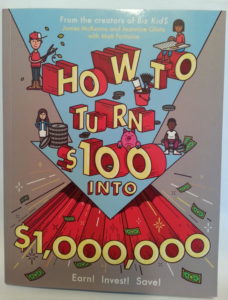 “The person who wrote this, are they white?” my godson asked me.
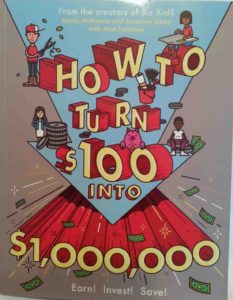
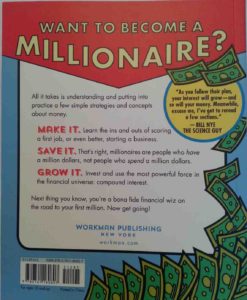
As described in my post titled, We should have bought Facebook and Bitcoin Stock, a mentor gave me a copy of the book How to Turn $100 into $1,000,000: Earn, Invest and Save. I started giving copies of the book to the younger people in my circle so that they could have a head start on some of the important concepts I only started learning in my late twenties – “Compounding Interest” for example, covered in Chapter 8. One of the lucky recipients was my godson.
I had just read a passage to him from the end of the book. The subsection was titled, “You made a million dollars? Great. Now Zip it”. The section warned against, “playing the high roller to impress people,” which could, “make you look like a fool” and, “invite theft.” I didn’t anticipate his question, but it was very telling about my godson’s world view – a teachable moment which I’ll return to with him in the future.
After asking him about his question, he told me that the passage I read to him sounded like a, “white way of thinking.” I first told him that it seemed that at 14 years of age, he’d started recognizing that there were differences in the value systems of different ethnic and racial groups – in this instance black people vs. white people. In terms of values, our people are known for frivolously spending their resources, flaunting their wares (many only depreciating) – signaling to one another as described by Dr. Boyce Watkins. I then cautioned my godson that not all white people are wealthy and that some were in fact poor. There were also some black people who were wealthy from things other than athletics and entertainment.
What was my godson growing up seeing in Prince Georges County, Md., the wealthiest black county in the United States? I’ll just say that earlier that day, I watched as many of the people at his house gushed over his blue and white Air Jordans – the ones with the shiny colored toes. They were enamored with name brand sneakers, clothing, and other symbols of money and perceived power – again many which only depreciate in value. I’ll stop there. In short, the values he was experiencing daily didn’t dictate keeping any material prosperity he would achieve quiet as it was a white way of thinking.
* * *
 I first thought about Asian-American wealth last year when someone on Twitter shared an infographic stating that Asian-American wealth has steadily grown, while their voter participation had stagnated. The point of the tweet was that while Black-America has been one of the more vocal groups during elections, and in civil rights/social justice arenas, we haven’t significantly closed the wealth gap with White-America (as a group). The implication of the tweet was that black people as a group were focusing on the wrong things.
I found some interesting data in a report by the Pew Research Center titled On Views of Race and Inequality, Blacks and Whites are Worlds Apart. While the report mostly compared black people and white people, it also included some data on Asians and Hispanics. I’ll start with the figure titled “Whites are more likely than blacks to have a college degree”. It showed that 36% more white U.S. adults ages 25 and up had college degrees versus 23% of blacks in 2015. Interestingly 53% of Asians-Americans had college degrees – a greater number than whites.
 A subsequent figure titled “Racial gaps in household income persist” showed that in 2015, blacks and Hispanics had median adjusted average household incomes of roughly $43,000. Whites had a median adjusted household income of $71,000, and surprisingly Asian-Americans had a median adjusted household income of $77,900. According to the report, Asian income has been on par or exceeded White income since 1987. Asian-Americans weren’t tracked in the report prior to 1987 so it’s not clear where exactly they started as a group. The gap between blacks and whites has steadily widened since the 1970s.
The figure titled “Blacks are twice as likely as whites to be poor, despite the narrowing of the poverty gap” showed that in 2014 the percentages of blacks and Hispanics in poverty was double that of whites and Asians. The next figure showed that whites have 13-times more wealth (net worth) than blacks in terms of household – $144,200 versus $11,200 for blacks. No data were presented on Asian-Americans. The figure titled “Homeownership is more common among whites than any other racial group” showed that whites led in homeownership, followed by Asians and then Hispanics and then blacks. Further data showed that blacks led in unemployment, versus the other three groups. Lastly blacks led in non-marital births, children under 18 living in single-parent households, and finally declining rates of marriage.
There was an interesting 2014 article from CNBC, written by Hailey Lee titled, How Asian- Americans are transforming the face of U.S. wealth. The article cited data from the Federal Reserve showing that Asian-American wealth had changed dramatically since 1989, growing to 70% of that of whites – $91,440 vs. $134,088. A subsection of the article titled “What came first: Wealth or education?” discussed whether or not the increased attainment of education could account for this gain in wealth.
The article stated that, “In 2013, 73% of Asians aged 35-39 held a degree beyond high school. That percentage was 54% for whites, 36% percent for blacks, and 23% for Hispanics. The disparities grow when looking at individuals with at least a four-year college degree: 65 % (Asian), 42 % (white), 26 % (black), and 16 % (Hispanic).”
 In the section titled, “The wealth effect”, the article further stated that, “When Charles Emmons narrowed the data set to examine Asians younger than 62, both levels of median income and median wealth surpassed whites. This implies that younger Asians tend to be financially stronger than older Asians. And older Asians compared to their white counterparts, are weaker financially.”
“There’s a huge population of hardworking, educated Chinese who look to the U.S. for real estate investment,” said Elizabeth Schwartz in the Washington Post’s article titled Wealthy Chinese buyers are a growing force in U.S. real estate markets. “But they come to this market (New York City) not with money to just throw around, but rather to make informed, well-reasoned investment choices.” I looked up this article because I’d heard in recent years that there were lots of foreign investors buying up U.S. real estate in the aftermath of the great recession. One of the most prominent groups being Chinese Nationals whose average home price in 2015 was $831,800 compared with $499,600 for all other international buyers according to the Rosen Consulting Group.
* * *
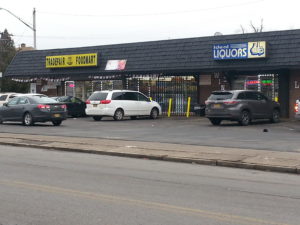
So, what does all this data mean? First, as Black-Americans our measuring stick is often White- America, but the data out there suggest that the time has come to start looking around and tracking other ethnic groups, and inquiring about how they’ve gotten to where they are in such relatively short periods of time. In my hometown of Buffalo, N.Y for example, on the eastside where I grew up, none of the stores are owned by the black people who live there. The owners are from the Middle East, and they’re able to effectively run their businesses and coordinate with one another – all while growing steadily wealthier.
I didn’t know that Asian-Americans had made such strides in income/wealth. With all of the talk about white wealth and privilege, I thought whites would have been the leaders in these areas. As described in my Challenging Stereotypes and misconceptions post, Asians are perceived as an extremely hardworking group. Malcolm Gladwell dedicated a whole chapter to their work ethic in Outliers. Their attainment of college degrees in comparison to other ethnic groups is noteworthy, but it’s also important to consider what their degrees are in – probably the STEM fields.
They also seem to be very entrepreneurial, and I’m not speaking exclusively about their restaurants. Again, if you look in many black communities you also see an abundance of beauty supply and nail shops. Lastly their spending habits and marital rates are probably also important factors.
 In closing, race discrimination, stereotypes and misconceptions are very dangerous in that they can enforce false narratives and world views. Those false narratives and views can lead whole groups of people in the wrong direction over long periods of time, setting them back for generations. Lastly, they can create false targets and goals to emulate and pursue – hence the power of political groups and the media.
Thank you for taking time out to read this blog post. If you’ve enjoyed this post, you might also enjoy:
• Challenging misconceptions and stereotypes in academic achievement
• Your net worth, gross salary, and what they mean
• We should’ve bought Facebook and Bitcoin stock: An investing story
• The differences between being cheap and frugal
• Mother’s day 2017: One of my mother’s greatest gifts, getting engaged, and avoiding my own personal fiscal cliff
• Father’s day 2017: Reflections on some of dad’s money and life lessons
The Big Words LLC Newsletter
For the next phase of my writing journey, I’m starting a monthly newsletter for my writing and video content creation company, the Big Words LLC. In it, I plan to share inspirational words, pieces from this blog and my first blog, and select videos from my four YouTube channels. Finally, I will share updates for my book project The Engineers: A Western New York Basketball Story. Your personal information and privacy will be protected. Click this link and register using the sign-up button at the bottom of the announcement. If there is some issue signing up using the link provided, you can also email me at bwllcnl@gmail.com . Best Regards.
 “Over your lifetime, you’ll actually miss more deals than you’ll catch onto.”
 Okay, let’s talk about
  “We should all pool our money together and buy
  Facebook’s stock rebounded over the next five years from that $17.55 per share drop and eventually appreciated to around $100 per share in 2015 when
  But there is so much more to it than buying low and selling high. There are lessons which take time and commitment to learn – this is part of positioning one’s self. Furthermore, there are often sacrifices to be made to have money to invest – sacrifices such as not buying a car if public transportation and
  For the people who were in position to get into

 This is the conclusion of my interview of Simone Griffin of



 This article is a continuation of my interview with Simone Griffin of HomeFree-USA regarding homeownership and the African American community. In


 One of the goals of the Big Words Blog Site is to discuss Financial Literacy-related topics, particularly as they relate to the African American community. A key aspect of wealth building is homeownership. Coincidentally, for my very first interview for the site, I had the privilege of interviewing the very knowledgeable Simone Griffin of
  Around 2012, two friends introduced me to Dave Ramsey’s
  AD: From your testimony at the tour stop, it sounds as you were pretty deep into the real estate investing world and experienced a lot of success, which is a lot of further than I ever got. I did some learning, but never got any deals done. Based upon your experience, once someone’s life becomes “Financially Peaceful”, would you recommend that arena for someone else? Once you get out to
  CB: I have an interesting story. This is pretty cool. I did not have a dad growing up. I actually had four fathers who were all violent and we were always running away from them, from abuse shelter to abuse shelter. So I didn’t have a dad and my Mom, because she was a single, Mom was always working three jobs and was never home. So I really raised myself, but I say that liberally because I’d be sitting in an apartment with no food and no furniture for days at a time completely bored stiff, but the one thing I did have was my Yellow Sony Walkman; if you remember from all the way back in the day before the